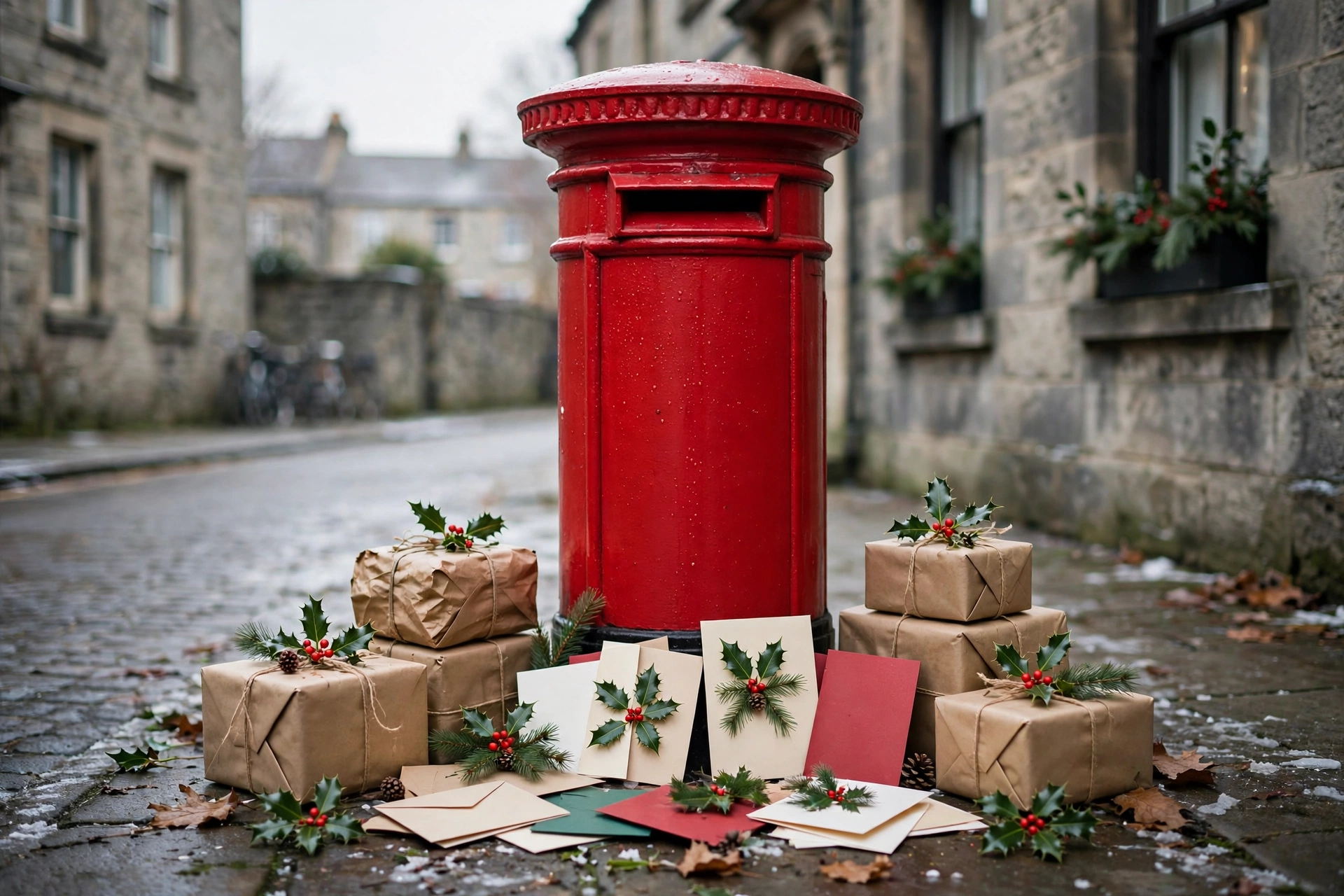
The Christmas post is already on the minds of households across the United Kingdom, and the message from postal workers, retailers and community groups is a familiar one: send early, pack well, and do not leave the most important parcels until the final days before Christmas. Every year the festive season brings a sharp rise in cards, gifts and online orders, and every year a sizeable number of senders discover too late that the service they planned to use has closed for Christmas delivery. Planning ahead is not simply a matter of convenience. For families separated by distance, for small businesses relying on December trade, and for anyone sending a gift that must arrive in time, an early posting can be the difference between a present under the tree and an apology in January.
Christmas Day itself falls on Friday 25 December 2026, and Royal Mail does not collect or deliver on Christmas Day or on Boxing Day. That break in service shapes the whole festive timetable. Anything that has not been delivered by Christmas Eve will, in most cases, wait until the working days after Christmas. Senders who understand that gap can work backwards from it, building in time for sorting, transport and delivery, and allowing for the inevitable delays that come with winter weather and record volumes. The busiest weeks of the year put real pressure on the network, and while most items do arrive on time, the margin for error shrinks dramatically in the final week.
Why Royal Mail dates matter
Royal Mail publishes a set of last posting dates each year, setting out the final day on which items sent by each service can be expected to arrive before Christmas. Those dates are the single most important reference point for anyone posting in December, and they differ by service. A letter sent by a slower service needs to go much earlier than a parcel sent by a guaranteed next-day service, and items going to remote areas or to the islands may need extra time as well. The dates are published as a guide, not as a promise for every single item, but they give senders a clear deadline to work towards.
For Christmas 2026, Royal Mail's official UK domestic last-posting dates have not yet been published. That fact itself carries an important message: nobody should treat a date seen on social media, in a forwarded message or in an old article as confirmed for this year. The only safe approach is to check Royal Mail's own page when the dates appear, and to plan on the basis of the pattern from previous years until then. In general terms, the pattern is well established. Second Class services usually close for Christmas delivery in the middle of December, while Special Delivery Guaranteed, the premium guaranteed service, usually remains open until around 23 December. Those are patterns, not confirmed dates for 2026, and the distinction matters. A sender who relies on a guessed date risks missing the real deadline by a day or more.
The advice from postal experts is therefore twofold. First, post early wherever possible, especially for Second Class items and for anything that cannot easily be replaced. Second, when the official dates are published, check them directly and note the deadline for the exact service being used, rather than assuming that one date covers every kind of post. Households that send a large number of cards, in particular, benefit from spreading the work across late November and early December rather than facing a single frantic trip to the post office.
The rush to send early
The rush to send early is not driven by postal deadlines alone. Retailers report that many shoppers now buy Christmas gifts weeks in advance, partly to spread the cost and partly to avoid the risk of popular items selling out. That earlier shopping naturally leads to earlier posting, as gifts are wrapped and sent while there is still time to correct a mistake. A parcel sent in early December that goes astray can usually be traced and, if necessary, replaced. A parcel sent on the last possible day leaves no room at all for anything to go wrong.
How to pack and address parcels properly
Good packing matters as much as good timing. Parcels that are poorly sealed, under-labelled or packed without enough protection are far more likely to be delayed or damaged, and the festive period is no time to take chances with a fragile gift. Postal guidance recommends a sturdy box, plenty of cushioning around the contents, and tape applied across all openings. The address should be written clearly, in full, with the postcode prominent, and a return address on the reverse can make all the difference if delivery proves impossible. For valuable items, senders are advised to consider a tracked or guaranteed service, which provides a record of the journey and, in many cases, compensation cover if something goes wrong.
What to do if a parcel is delayed
Even with the best planning, some items will be delayed. Winter weather, road disruption and sheer volume can all slow the network, and a parcel that was posted in good time may still arrive later than expected. In that situation, the first step is to use any tracking reference provided, which will usually show the most recent scan and the current stage of the journey. If the item was sent by a guaranteed service and has missed its guarantee, the sender may be entitled to a claim, and should contact the service provider with the details. For untracked items, patience is often required, as a parcel can appear to stall for a day or two before moving again through the system.
Looking ahead to the festive season
The broader picture is one of a postal service adapting to changing habits. Letter volumes have fallen as communication has moved online, while parcel volumes have risen sharply, driven by online shopping. Christmas concentrates both trends into a few short weeks. Extra staff, additional vehicles and extended sorting hours are all part of the seasonal response, but they cannot entirely remove the risk of delay in the final days.
For households, the practical plan is straightforward. Start early, write cards in batches, and post gifts as soon as they are ready rather than storing them until mid-December. Check Royal Mail's official page for the confirmed 2026 last-posting dates as soon as they are published, and note the deadline for each service used. Choose a tracked or guaranteed service for anything valuable or irreplaceable. Pack carefully, address clearly, and keep proof of posting. Above all, remember that Christmas Day itself brings no deliveries, and that anything not delivered by Christmas Eve will wait until after the holiday. A little planning now can spare a great deal of disappointment later, and can ensure that the gifts, cards and good wishes that make Christmas special arrive when they are meant to: in time, intact, and with the festive spirit undiminished.