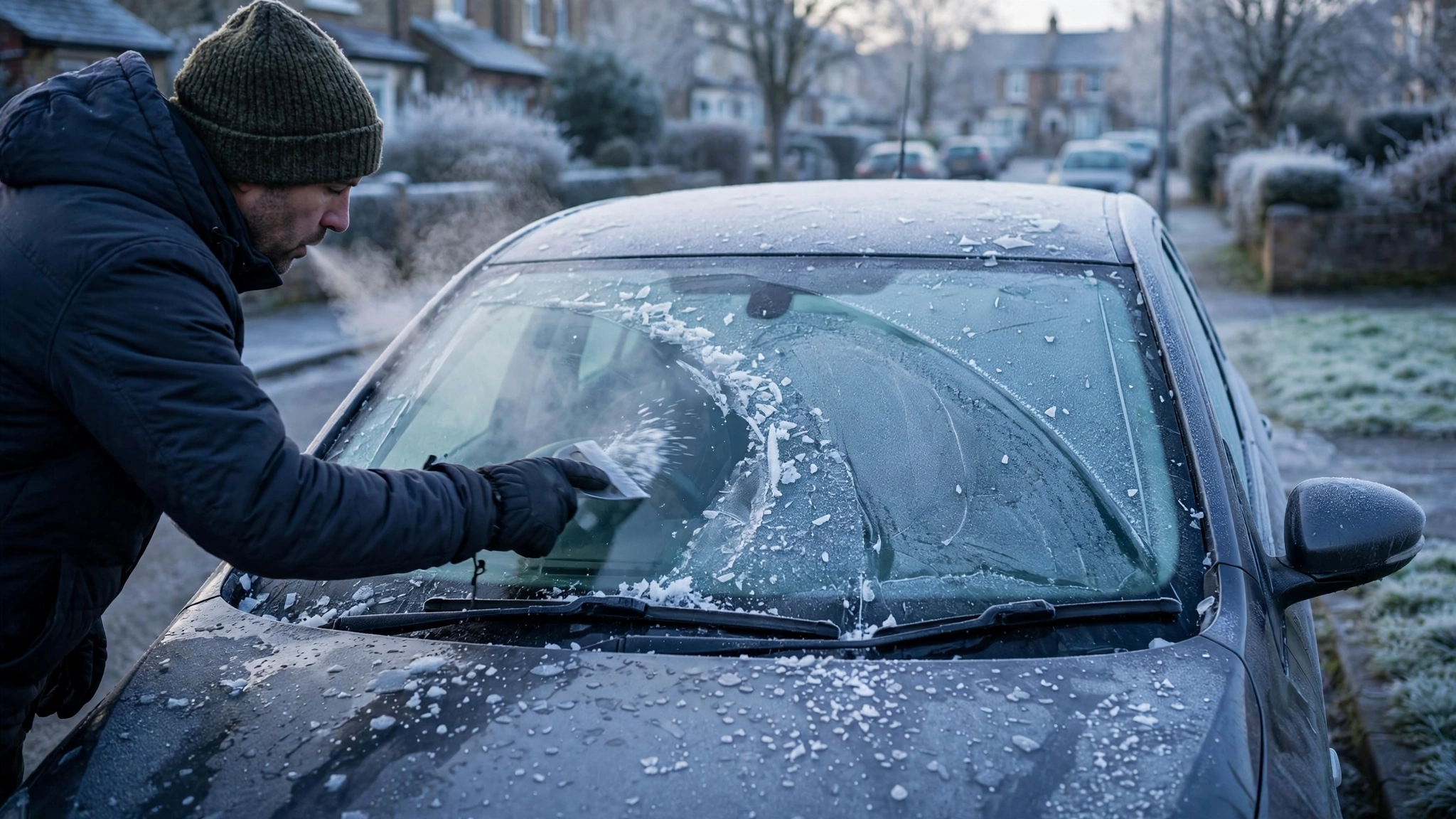
October has its own calendar, and drivers ignore it at their peril. The evenings darken, the first frost silvering the windscreen appears without warning, and a battery that coped happily in September gives up on a cold November morning. Cold weather, dark evening commutes and flat batteries are a regular part of British winter, and a winter check does not require mechanical expertise or expensive equipment — just an hour, a few basics, and the checks below, run while October still gives you mild days to work in. Run them in order, tick them off as you go, and book the garage visit before the cold sets in rather than in the middle of January.
☐ Battery: the number one winter failure
Cold weather is hard on car batteries. The chemical reactions inside a battery slow down in the cold, just when the engine needs more power to turn over and the heater, lights, and heated screens are all drawing current. A battery that coped in September can give up on the first frosty morning of November.
Warning signs are easy to spot: slow cranking, dim headlights, or a dashboard that flickers when you turn the key. If your battery is more than four or five years old, or if starting has felt sluggish lately, get it tested before winter — most garages and motor factors will test it free of charge. A new battery is far cheaper than a morning spent waiting for recovery.
☐ Tyres: grip is everything
Check the tread depth across the whole width of each tyre — the legal minimum is 1.6mm, but most safety experts recommend replacing tyres well before they get that low, particularly for winter driving. Also look for cracks, bulges, or uneven wear, which can signal alignment or pressure problems.
Pressure matters too, and cold air lowers it. Check pressures at least once a month through winter, including the spare if you have one, and inflate to the figure in the handbook or on the driver's door sticker — not the maximum printed on the tyre sidewall. If you drive regularly in hilly or rural areas where ice and snow linger, it is worth discussing winter or all-season tyres with a tyre fitter; for most UK drivers, good all-season tyres are a sensible compromise.
☐ Lights, wipers, and seeing clearly
Winter means driving in the dark more often, in rain and spray. Walk around the car and check every light: headlights, tail lights, brake lights, indicators, fog lights, and the number-plate light. Have someone watch the brake lights while you press the pedal, or back up to a wall at night and use the reflection.
Wipers deserve the same attention. If they smear, squeak, or leave streaks, replace the blades — they are inexpensive and take minutes to fit. Top up the washer fluid with proper screenwash, not plain water: screenwash contains antifreeze that stops the reservoir and jets freezing on a cold night, and it clears road grime far better than water alone. Keep an ice scraper and a de-icer in the car, not in the garage.
☐ Coolant, oil, and fluids
The cooling system needs the right concentration of antifreeze — not just in the depths of winter, but all year round. If the coolant level is low or the mixture is weak, the engine can freeze and crack on a cold night, which is one of the most expensive failures a car can suffer. If you are unsure of the mixture, a garage can test it in minutes during a routine service.
Check the oil level and its condition while you are there. Cold starts are harder on the engine, and clean oil at the right level is the simplest protection it gets. Top up the brake fluid if needed, and if the brake pedal feels soft or spongy, have the brakes inspected before winter rather than after.
☐ Emergency kit in the boot
Pack a few basics in the boot: a warm blanket, a torch with charged batteries, a phone charger, a bottle of water, and a snack. A high-visibility vest and a warning triangle are worth carrying too — if you do break down on a dark road, being seen matters as much as being warm.
Keep the fuel tank at least a quarter full in cold weather, and before any long journey in snow or ice, check the forecast and road conditions, tell someone your route, and allow extra time. If the journey is not essential and the conditions are bad, wait.
☐ The breakdown drill, learned before you need it
Breaking down in winter is miserable, but it is much safer if you know the drill in advance. Get as far off the road as you safely can, switch the hazard lights on, and put on a high-visibility vest before you step out of the car. Place the warning triangle well behind the vehicle so approaching drivers have time to react, then call for recovery and give your location as precisely as you can. If you are on a motorway or a fast dual carriageway, get out of the car if it is safe to do so and wait behind the barrier, away from traffic — staying in a car on a live carriageway is the greater risk. Keep warm with the blanket from your kit, keep your phone charged, and let someone know where you are and that you are waiting for help.
Two driving habits are also worth building before the bad weather arrives. Brake gently and earlier than usual on wet or icy roads, and leave a much larger gap to the vehicle in front than you would in summer — stopping distances grow sharply when the road is slippery. Use fog lights only when visibility is genuinely poor, and switch them off when it clears, as they dazzle drivers behind you.
The October routine, every year
Make October the month this happens, every year, without needing to remember why. In the first mild week of October, book a pre-winter service: a garage can check the battery, coolant, brakes and tyres in one visit, and catching a worn part in October beats discovering it on a frosty morning. On the same weekend, walk round the car with this list — battery, tyres, lights, coolant, kit — and tick each check off. Then read the breakdown drill once, before any long winter journey, while you are warm and indoors. Next October, do it again in the same order. The routine is the point: a car checked every October rarely produces a January surprise.