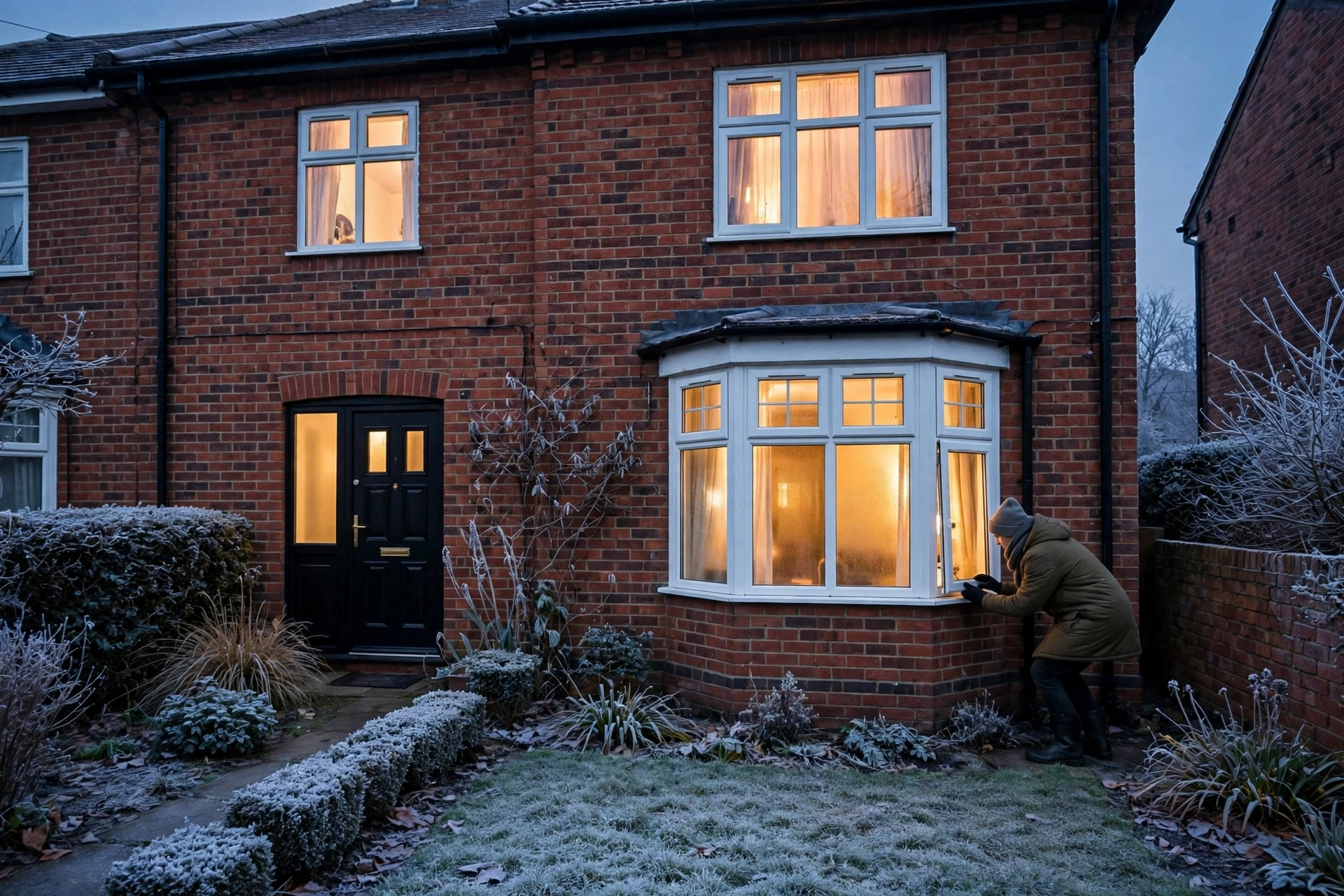
Winter in the UK rarely arrives with one dramatic freeze. It creeps in through October and November: darker evenings, damp mornings, and that first cold snap that reminds you the heating has not been switched on since spring. Book tradespeople in autumn, while they are still available and the weather is still forgiving, rather than after the first cold snap — because once the cold arrives, every heating engineer in the area is busy, and the job you meant to do in October becomes a January emergency. The seven jobs below run in the order to do them, over a few weekends in autumn.
1. Service the boiler and test the heating
Autumn is the time to check the boiler is in good shape. If it has not been serviced in the last year, book a Gas Safe registered engineer before the cold weather arrives. A service checks that the boiler is running safely and efficiently, and can catch small problems — a worn seal, a failing pump — before they turn into a breakdown.
If you have a gas boiler, the service is also a safety check. A faulty boiler can produce carbon monoxide, a colourless and odourless gas that is extremely dangerous. Make sure you have a working carbon monoxide alarm near your boiler and gas appliances, and test it with your smoke alarms.
Before you call anyone out, try the heating yourself. Switch it on for an hour on a mild day and check that every radiator warms up and that the thermostat and timers work. It is far better to discover a problem on a mild October afternoon than on a freezing January evening.
2. Bleed the radiators
Radiators hot at the bottom and cold at the top probably have trapped air inside, which stops them heating properly. Bleeding a radiator — letting the air out with a radiator key — takes a couple of minutes and can make a noticeable difference to how warm a room feels.
You will need a radiator key, a cloth, and a small container to catch drips. With the heating off and the radiators cool, open the bleed valve slowly until air hisses out, then close it as soon as water appears. Afterwards, check the boiler pressure gauge; bleeding can drop the pressure, and you may need to top it up following your boiler manual.
While you are at it, check that furniture and curtains are not blocking your radiators. A sofa pushed against a radiator, or curtains hanging over one, traps the heat where nobody feels it. Moving things a few inches away lets warm air circulate properly.
3. Draught-proof doors and windows
You can feel them around front doors, letterboxes, keyholes, window frames, and where floorboards meet skirting boards. Sealing them is cheap, quick, and often makes a room feel warmer.
Self-adhesive foam strips and brush strips fit around door and window frames, a letterbox brush keeps the wind out, and a keyhole cover costs very little. A draught excluder seals gaps under internal doors, and a brush strip seals an external door. If your home has a chimney you do not use, a chimney balloon or removable draught excluder stops warm air escaping up the flue.
Do not seal every gap, though. Homes need some ventilation to prevent condensation and damp, and kitchens and bathrooms in particular need airflow after cooking or showering. The goal is to stop the cold wind whistling through, not to make the house airtight.
4. Protect the pipes from freezing
When water freezes inside a pipe, it expands, and the pressure can split the pipe. The real damage often happens when the ice thaws and water pours out.
Insulate exposed pipes, especially in the loft, garage, and under the floor, with foam pipe insulation from a hardware shop — it is inexpensive and slides over the pipe. Insulate your cold water tank in the loft too, and make sure the loft hatch fits snugly.
Know where your stopcock is, and check that it turns. If a pipe bursts, turning off the water quickly is the difference between a puddle and a flood. Show everyone in the household. If you go away in winter, leave the heating on low — around 15 degrees — rather than switching it off, so the pipes never get cold enough to freeze.
5. Check the roof, gutters, and outside
Autumn is the time to look up. Blocked gutters overflow in heavy rain, soaking walls and causing damp. Clear leaves and debris from gutters and check downpipes are not blocked — a garden hose run down the pipe will show whether water flows freely. If you are not comfortable on a ladder, hire someone.
From the ground, look for slipped or cracked roof tiles, and check the flashing around chimneys and roof windows. If you can see daylight through the roof from inside the loft, or damp spots on the loft insulation, get it looked at before winter storms arrive.
Outside, secure anything that could blow around in high winds: garden furniture, trampolines, pots, and loose fence panels. Cut back overhanging branches that could fall on the house or a power line, and drain or cover outdoor taps so they do not freeze and split.
6. Prepare for storms and power cuts
Winter storms can knock out power, sometimes for hours. A small emergency kit costs little and removes a lot of stress. Keep torches with spare batteries, a battery-powered or wind-up radio, a portable phone charger, bottled water, and food that does not need cooking, plus blankets, warm layers, and a basic first aid kit.
Charge your phone when a storm is forecast, and know how to find updates from your local power network operator if the electricity goes out. Keep the number somewhere you can find it without your phone. If you rely on medical equipment that needs power, ask your network operator in advance about joining the Priority Services Register, which gives extra support during outages.
7. Run the whole list once, on a mild weekend
With the six jobs done, run the list once from the top on a single mild weekend: boiler serviced and carbon monoxide alarm tested, radiators bled and heating tested, draughts sealed around doors, windows, and letterboxes, pipes insulated and stopcock located, gutters cleared and roof checked, garden secured and outdoor taps protected, emergency kit ready and phone chargers charged. One pass, in order, catches the job that was half-finished — the radiator that still needs bleeding, the gutter that still holds leaves — while there is still a mild weekend left to finish it.
One job to do this weekend
Book the boiler service this weekend. It is the one job on this list that depends on someone else's diary, and it is the job that unlocks the rest: the engineer tests the heating, you bleed the radiators while the system is fresh in your mind, and the stopcock check follows naturally while you are already thinking about pipes. Everything else on the list can be done by hand, at your own pace, over the following weekends — but the boiler booking has to go first, before the first cold snap books every engineer in the area.