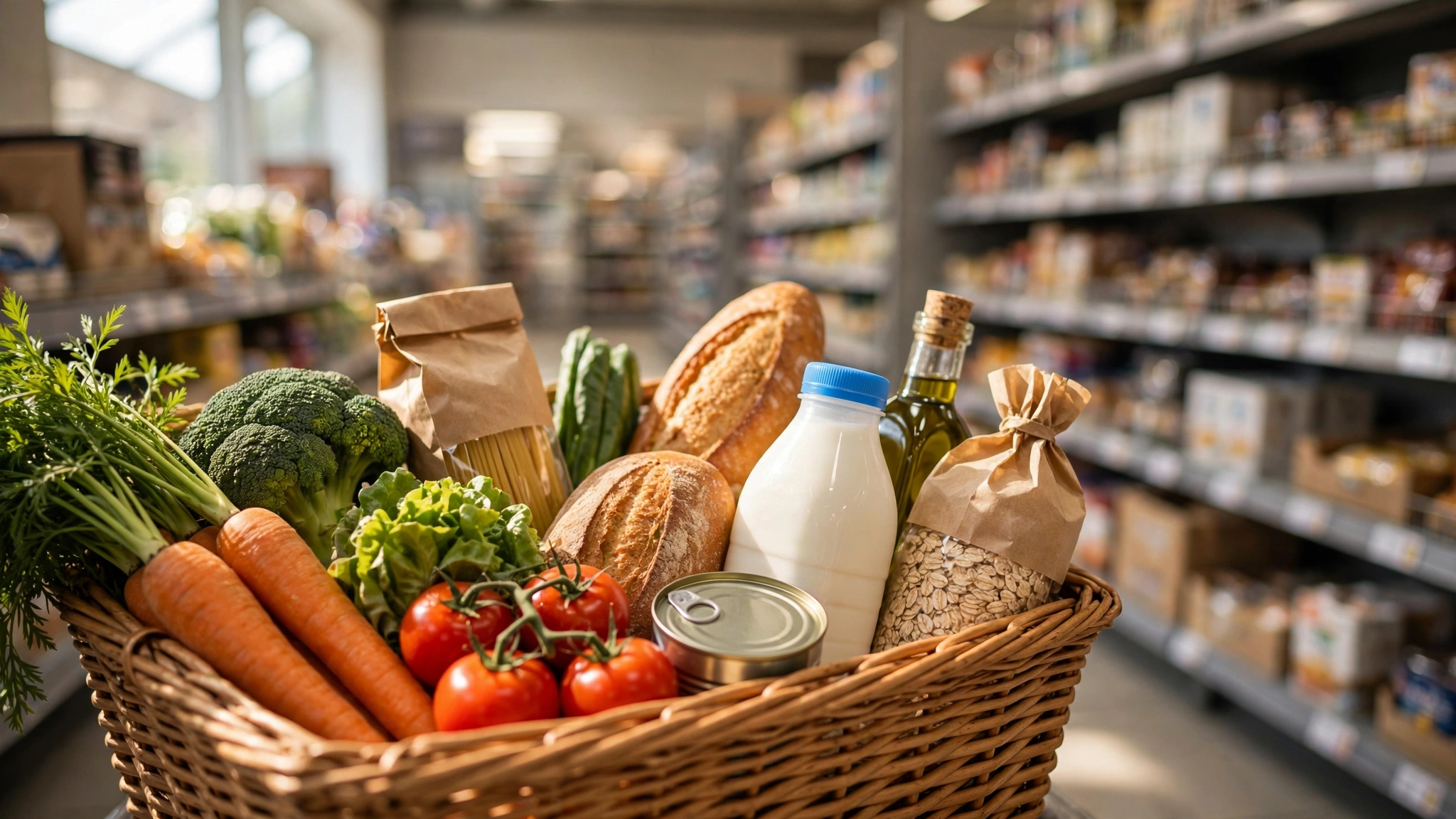
Food prices have climbed steadily, and for most households the grocery bill is now one of the biggest weekly outgoings after rent or mortgage and energy. A significant share of the food British households buy ends up thrown away — fresh fruit and vegetables, bread, and leftovers first among them — and every item binned is money wasted. The way out is not a single trick. It is a week, run in order: plan, shop, cook, store. Follow the week below and the savings stack up on their own.
Sunday: plan the week before you shop
Decide what you are going to eat before you set foot in the shop. A meal plan for the week — even a rough one scribbled on the back of an envelope — helps avoid two costly habits: buying things you already have, and buying things you never use.
Start by checking what is already in your fridge, freezer, and cupboards. Then plan five or six evening meals around what you have, using up leftovers and perishables first. Write a list from the plan, and stick to it in the shop.
Plan for the reality of your week, not an idealised version of it. If you know Thursday will be a late night, plan something quick — a jacket potato, an omelette, a stir-fry — rather than an ambitious recipe you will abandon in favour of a takeaway. That one honest decision, made on Sunday, is worth more than any voucher later in the week.
Monday: shop the list, and read the small print
Monday's shop is where the list earns its keep. Supermarket own-brand products have come a long way. For staples — pasta, tinned tomatoes, rice, oats, milk, eggs, bread — the difference between a branded product and the supermarket's own version is often small in taste and large in price. Trying the own-brand version of a few regular items is one of the quickest wins available.
The label to trust is the unit price: the small print that shows the cost per 100g, per litre, or per item. A bigger pack is not always better value, and a special offer is not always a saving. Comparing unit prices takes seconds and cuts through the packaging tricks. The same habit applies to promotions: "buy one get one free" only saves money if you would have bought two anyway and can use both before they go off.
Supermarkets are convenient, but they are rarely the cheapest place for everything. Local markets — for fruit, vegetables, meat, and fish — often beat supermarket prices, especially towards the end of the day when traders reduce prices to clear stock. Greengrocers and independent butchers can be competitive too, and buying exactly the quantity you need avoids waste. Even if you prefer to do your main shop elsewhere, buying tinned goods, cleaning products, and store-cupboard staples at a discount shop can shave pounds off the weekly bill.
Tuesday evening: build the meal around the reduced section
The reduced-to-clear section, usually found near the end of the fresh aisles, is another reliable source of savings. Bread, dairy, meat, and ready meals marked down because they reach their use-by date that day are perfectly good if you eat or freeze them the same day. Many shoppers build their evening meal around what is reduced rather than the other way round — a habit that can halve the cost of a meal.
Tuesday is a good night for it: the week's plan is already set, so a reduced bargain slots into a meal you were cooking anyway instead of becoming an impulse buy. A loyalty price works the same way. Most major supermarkets run loyalty schemes that reward regular shoppers with points, vouchers, or member-only prices, and they cost nothing to join. Use them passively — scan the card, collect the points — rather than letting them drive you to buy things you do not need. A loyalty price is only a saving if the item was on your list in the first place. A discounted chocolate bar you did not plan to buy is not a saving — it is spending. Cashback apps and websites that reward grocery shopping can add a small extra return, and many banks now offer cashback on supermarket spending through their apps. None of these will transform your finances on their own, but stacked with the habits above, they are a useful top-up.
Midweek: cook more, and cook double
Cooking from scratch is almost always cheaper than buying ready meals or ordering in, and it does not have to be complicated. A handful of reliable, cheap meals — a vegetable curry, a pasta bake, a bean chilli, a tray of roasted vegetables with sausages — can carry a household through the week for a fraction of the cost of ready meals.
Batch cooking takes this further: cook a double portion, eat one tonight and freeze one for next week. A freezer stocked with two or three homemade meals is the best defence against the "there's nothing in, let's order in" evening, which is where many food budgets quietly fall apart. Cook the right amount, too — weighing rice and pasta is less exciting than it sounds, but it stops the endless cycle of cooking too much.
End of the week: store it right, and use it up
The week's last job is storage, and it is where waste is won or lost. Store fruit and vegetables properly: potatoes in a cool dark place, salad in the fridge, bread in a bread bin or frozen in slices. Treat leftovers as an asset: last night's roast chicken becomes today's soup or sandwiches; leftover rice, cooled quickly and refrigerated, becomes tomorrow's fried rice.
Freezing helps with waste across the whole week. Most cooked meals, soups, sauces, bread, and raw meat freeze well. A freezer full of labelled portions is a buffer against both waste and the temptation of an expensive takeaway on a tired evening. Before next Sunday's plan, look in the freezer first — the meals already there are the starting point for next week's list, and the week begins again a little cheaper.
Verdict: planning beats bargain-hunting
Of all the week's habits, the plan wins. Reduced stickers, own-brand swaps, unit prices and batch cooking all help, but none of them rescues a week that started without a list. A household that plans five or six meals around what it already owns, shops from that list, and freezes what is left will spend less than a household chasing every offer with no plan at all — and eat better doing it. Start with the plan, add the other habits one at a time, and let the week do the saving.