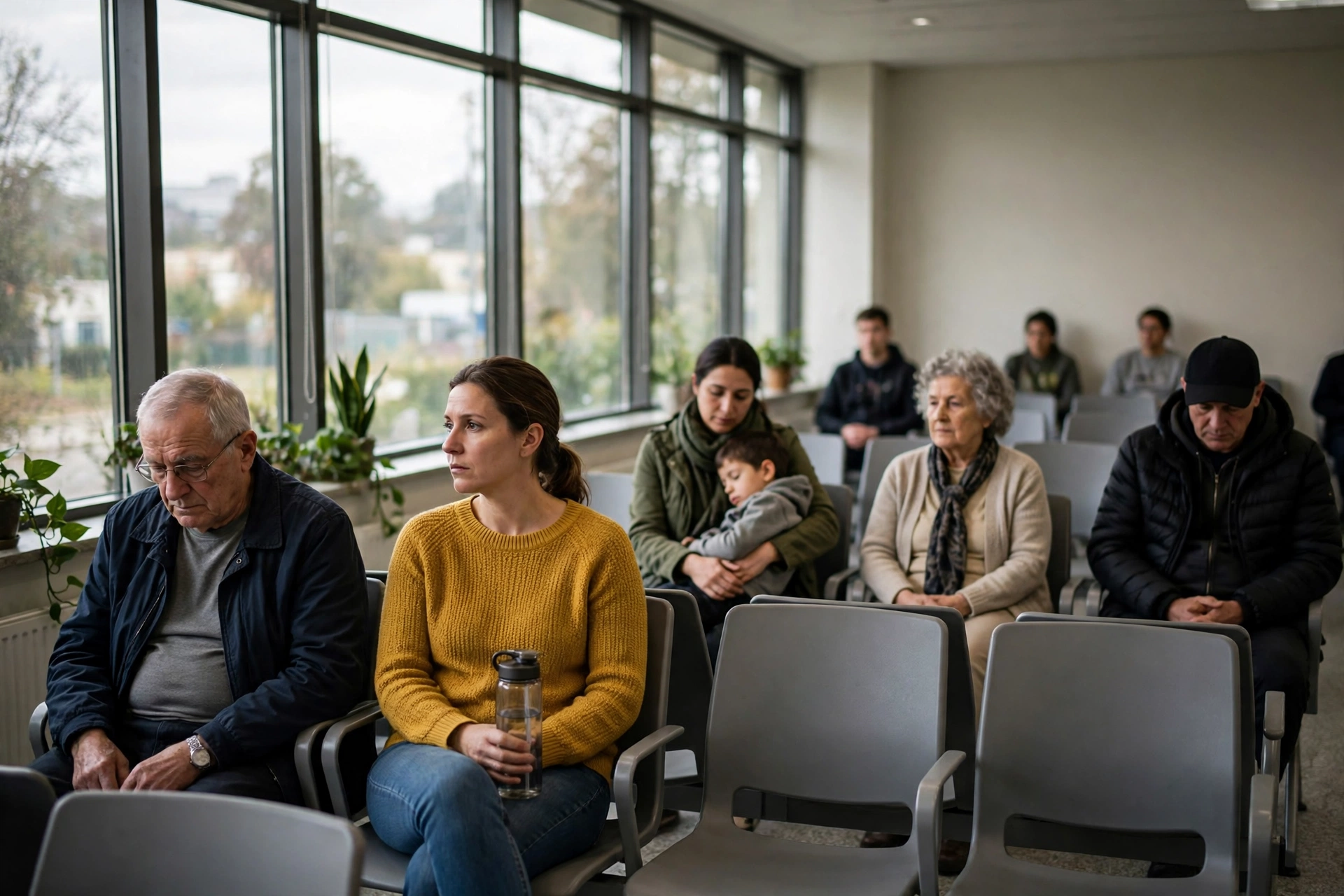
How do you get seen sooner? It is the question every patient on a waiting list asks, usually after the letter arrives with a date months away and a condition that does not wait politely for it. The answer, increasingly, is that there is no single queue any more. Patients are offered several routes intended to shorten the wait, and they work in very different ways: dedicated surgical hubs for routine operations, community diagnostic centres for scans and tests closer to home, and a choice of hospital where a sooner date is available elsewhere. Knowing which route fits your treatment — and which does not — is the difference between a shorter wait and a wasted phone call.
The queue itself needs no introduction. Years of rising demand, combined with the disruption of recent years when routine care was paused and resources redirected, left hospitals with far more patients waiting than they could treat in the normal course of work. Even before routine services were interrupted, demand was growing as the population aged and as medical advances made it possible to treat more conditions. Hospitals were already running close to capacity, with little slack for surges in demand or for staff absence. When planned operations were postponed on a large scale, the queue grew rapidly, and it has never fully recovered. The pandemic years changed how hospitals work in lasting ways: infection control measures, staff sickness and the need to keep beds available for emergencies all reduced the number of routine procedures that could be carried out, and many patients delayed seeking help, presenting later with more advanced problems that take longer to treat.
For patients, waiting is rarely just an inconvenience. Someone awaiting a knee replacement may struggle to walk, to work, or to sleep. Someone waiting for a cataract operation may lose confidence driving or reading. Someone waiting for a scan may live for months with the anxiety of not knowing what is wrong. Conditions can worsen while people wait, turning a straightforward procedure into a more complex one and making recovery longer when treatment finally arrives. Families feel the effects too: partners and relatives take on caring roles, help with daily tasks, and provide transport to appointments. Employers lose working days to sickness and to caring responsibilities. The longer people wait, the more their lives contract around their condition, and the harder it can be to return to full activity afterwards.
Route One: Surgical Hubs for Routine Operations
The first route is the surgical hub: a dedicated setting where routine operations can be carried out away from the pressures of emergency care, protecting planned lists from the daily surges that once saw operations cancelled at short notice. From hip replacements to cataract surgery, from routine operations that follow a standard pattern, the hub model works because it separates the predictable from the unpredictable. An emergency department cannot be scheduled; a cataract list can, and in a hub it is not competing with it for theatre time, beds and staff on the day.
That separation is the hub's strength and its limit. It suits operations that are routine, repeatable and do not need the full resources of a major acute hospital. It does not suit complex cases that need intensive care nearby, or treatments where the bottleneck is not theatre time at all. Extra evening and weekend sessions are common in the same spirit, and better scheduling systems reduce wasted theatre time, but none of these measures clears the backlog overnight. Together they have allowed hospitals to treat more patients than before, and for a patient whose operation fits the hub pattern, asking whether a hub list is available is a question worth putting directly.
Route Two: Diagnostic Centres Closer to Home
The second route solves a different bottleneck: not the operation, but the wait to find out what is wrong. Community diagnostic centres bring scans and tests closer to home, so that patients can be assessed more quickly and referred on with less delay. A patient waiting for a scan is not waiting for a surgeon; they are waiting for information, and every week without it is a week of anxiety and a week in which a condition may be advancing unseen.
Diagnostic centres work because they unblock the start of the pathway rather than the end of it. Virtual consultations play a similar role at the follow-up end, allowing some appointments to happen by phone or video and freeing clinic space for new patients. For a patient whose wait is diagnostic — a scan, a test, an assessment before any treatment decision — this route, rather than a surgical hub, is the one to ask about. It will not shorten an operation queue directly, but it can shorten the total time from first concern to a plan, which is the wait patients actually experience.
Route Three: Choosing a Hospital With a Sooner Date
The third route is the most personal, and the most dependent on willingness to travel: a choice of hospital where a sooner date is available elsewhere. Some trusts share capacity across regions so that patients can be treated sooner at a neighbouring hospital if they are willing to travel, and some patients are now offered a choice of hospital or a sooner date elsewhere directly. Taking up that offer can cut the wait considerably — but only if the practicalities work. Travel, transport for follow-up appointments, a carer who can get there, time off work: all of these decide whether a sooner date elsewhere is a real option or a theoretical one.
This route also exposes the inequality in the system most plainly. Some pay for private treatment when they can afford it, creating a two-tier experience that troubles many. Others borrow money or use savings to jump the queue, while those who cannot afford to do so simply wait longer, deepening health inequalities between richer and poorer households. Choice of hospital is not a private purchase, but it still favours patients who can travel, who can rearrange work, and who know to ask. Knowing the offer exists is, for many patients, the first barrier.
Staffing runs underneath all three routes. The health service depends on doctors, nurses, therapists, radiographers and support staff, and shortages in key roles limit how many patients can be seen. Recruitment from overseas has helped, and training places have expanded, but it takes years to train a consultant surgeon or a specialist nurse. In the meantime, hospitals compete for the same pool of staff, and gaps in rotas mean clinics cancelled and lists that move more slowly than patients hope. There is also a renewed focus on prevention and on keeping people out of hospital where possible: community services, GP practices and social care all play a part, and if conditions are caught earlier and managed well, fewer people need hospital treatment at all. That is a long game, but it is one of the few ways to reduce pressure on waiting lists permanently rather than simply working through the queue faster.
Where to Go From Here
If you are on a waiting list, the signpost is not a single door but a conversation, and it starts in one place. Contact your GP if symptoms worsen, and keep your contact details updated so a short-notice slot can be offered if one becomes available — that short-notice list is how cancelled slots get filled, and it only works if the hospital can reach you. Ask, through that GP contact, which of the three routes fits your case: a surgical hub list for a routine operation, a community diagnostic centre for a scan or test, or a sooner date at another hospital if you are willing and able to travel. The list will only fall when the number treated each month consistently exceeds the number joining, and that depends on sustained investment in staff, beds and equipment, and on keeping emergency pressures from swallowing planned care. While that larger work continues, the GP route — symptoms reported, details kept current, the right route asked about by name — is the signpost that turns a passive wait into a wait with a next step.