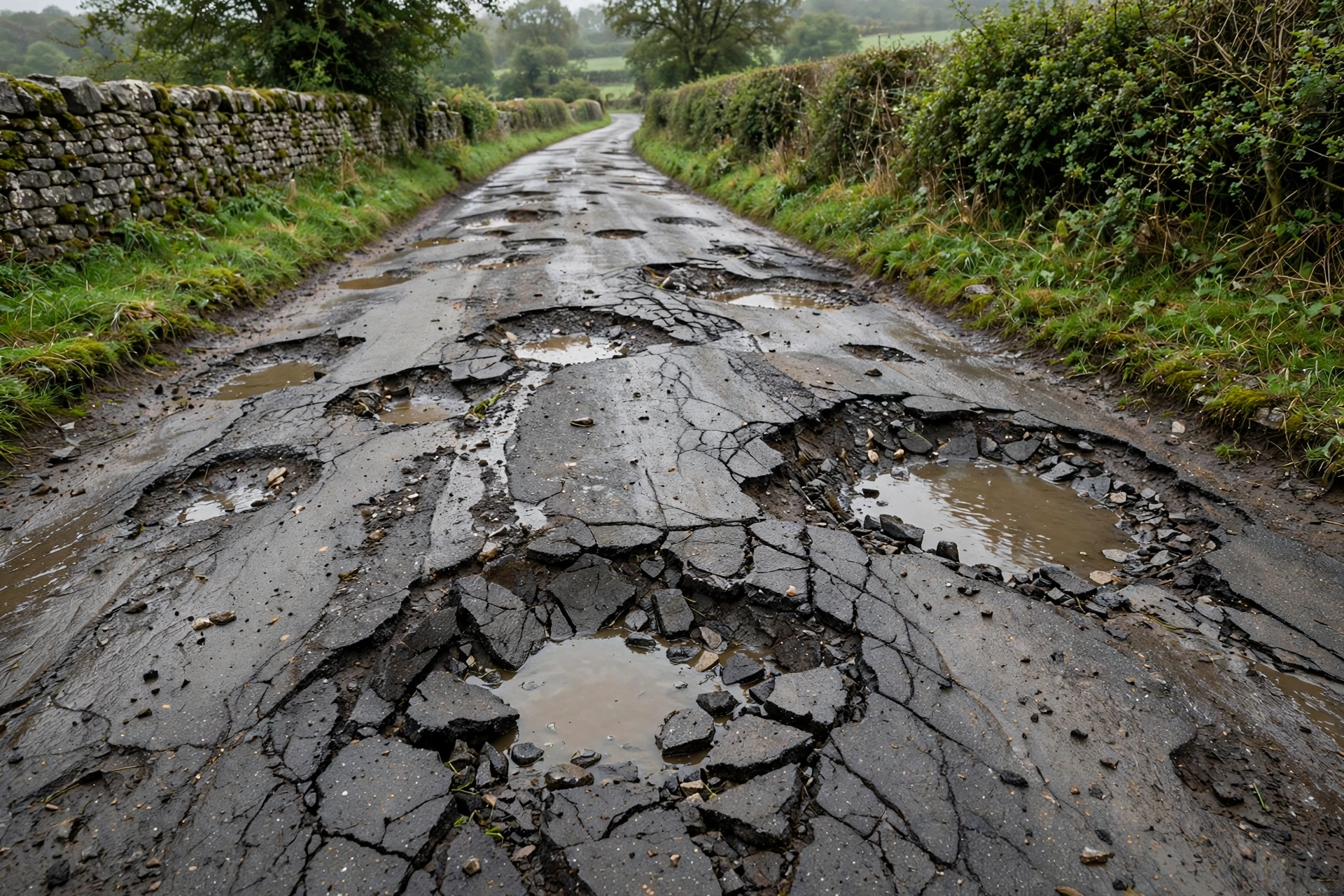
For drivers across Britain, potholes have become a familiar and frustrating part of everyday journeys. A sudden jolt, a loud bang and the sinking feeling that something may be damaged are experiences many motorists now know all too well. What was once seen as a seasonal nuisance is now described by drivers, garages and motoring groups as a serious and persistent problem, affecting main roads and quiet residential streets alike.
The cost is not just financial, although that is significant enough. A damaged tyre, a buckled wheel or broken suspension can mean an unexpected bill, time off the road and the hassle of arranging repairs. For people who depend on their car for work, for caring responsibilities or for getting children to school, losing a vehicle even for a short time can disrupt daily life. For cyclists and motorcyclists, potholes carry a greater risk still, because a sudden dip or broken surface can cause a fall with serious consequences.
Why roads are breaking up
Road surfaces break down for a range of reasons, and winter weather often makes things worse. Water seeps into small cracks in the surface, freezes and expands, and then thaws, gradually breaking the road apart. Heavy traffic, especially from large vehicles, adds to the strain, while ageing surfaces that have not been fully resurfaced for many years are more vulnerable to damage.
Councils are responsible for most local roads, and they face difficult choices about how to spend limited budgets. Resurfacing a whole road is expensive, so many authorities focus on patching individual potholes as they are reported. Patching can help in the short term, but if the underlying surface is worn out, new potholes can appear nearby before long. Drivers often complain that a repaired pothole soon reappears, or that a road is left with a patchwork of repairs rather than a smooth new surface.
The scale of the task is enormous. Britain has a vast network of local roads, built up over many decades, and keeping all of it in good condition requires sustained investment. Short-term funding announcements are welcome, but road engineers say that what is really needed is long-term planning, so that councils can plan resurfacing programmes properly instead of reacting to the worst damage each year.
The bill facing drivers
Garages across the country report a steady stream of vehicles damaged by poor road surfaces. Tyres are the most common casualty, but suspension, steering and wheel damage are also frequent, and repairs can quickly become costly. For older cars, a major repair caused by a pothole can raise difficult questions about whether the vehicle is worth fixing at all.
Many drivers try to claim compensation from the council responsible for the road, but the process can be slow and uncertain. Councils may argue that they were not aware of a particular pothole, or that it had already been scheduled for repair. Drivers need evidence, including photographs, repair bills and details of exactly where and when the damage happened, and even then a claim may not succeed. That leaves many motorists feeling that they bear the cost of a problem they did not create.
Insurance is another complication. Some drivers claim on their insurance, but that can affect future premiums and may involve an excess payment. Others pay out of pocket to avoid a claim, absorbing a cost that feels unfair. Either way, the financial burden falls on the driver, while the underlying road remains in need of repair.
Safety concerns for all road users
Potholes are not only a matter of money. They are also a safety issue. Drivers who swerve suddenly to avoid a pothole can put themselves and others at risk, especially on busy or narrow roads. At night or in heavy rain, potholes can be almost invisible until it is too late to avoid them, increasing the chance of damage or a loss of control.
Cyclists are particularly vulnerable. A wheel caught in a deep pothole can throw a rider from their bike, and the consequences on a busy road can be severe. Motorcyclists face similar risks, as do pedestrians who may trip on broken pavements at the edge of damaged roads. Road safety groups argue that maintaining surfaces properly is a basic safety duty, not a luxury, and that the cost of neglect should be measured in injuries as well as repair bills.
Rural roads deserve special attention in this debate. In country areas, roads may be narrower, less well lit and used by farm vehicles, walkers and horse riders as well as cars. A badly damaged rural road can isolate communities, make journeys slower and more stressful, and deter visitors. Residents in rural areas often feel that their roads are overlooked in favour of busier urban routes, even though they depend on them just as much.
What drivers and councils can do
Drivers can reduce the risk by staying alert, keeping a safe distance from the vehicle ahead so potholes can be seen in time, and slowing down on roads known to be in poor condition. Checking tyres regularly, including pressure and tread, also helps, because a well-maintained tyre is better able to cope with uneven surfaces. Reporting potholes promptly, with a clear location and photograph where safe to do so, helps councils identify the worst spots.
Councils, for their part, are being urged to move from patching to proper resurfacing where roads have reached the end of their life. New techniques and materials may help surfaces last longer, and better drainage can reduce the water damage that causes many potholes in the first place. Sharing good practice between authorities, and planning work so that roads are not dug up repeatedly by different utilities, could also make a difference.
What happens next
The debate about potholes is unlikely to fade, because drivers encounter the problem every day and feel its effects directly. Campaigners want a long-term funding settlement for local roads, with enough certainty for councils to plan ahead and enough accountability to show that money is being spent where it is most needed. They also want clearer information for drivers about how to report damage and claim compensation.
For motorists, the hope is simple: smoother, safer roads that do not damage their vehicles or put them at risk. Achieving that will take time and sustained effort, but drivers argue that the cost of inaction is already being paid, one repair bill at a time. Until roads are properly fixed, potholes will remain a symbol of a wider question about how Britain looks after the everyday infrastructure that everyone relies on.