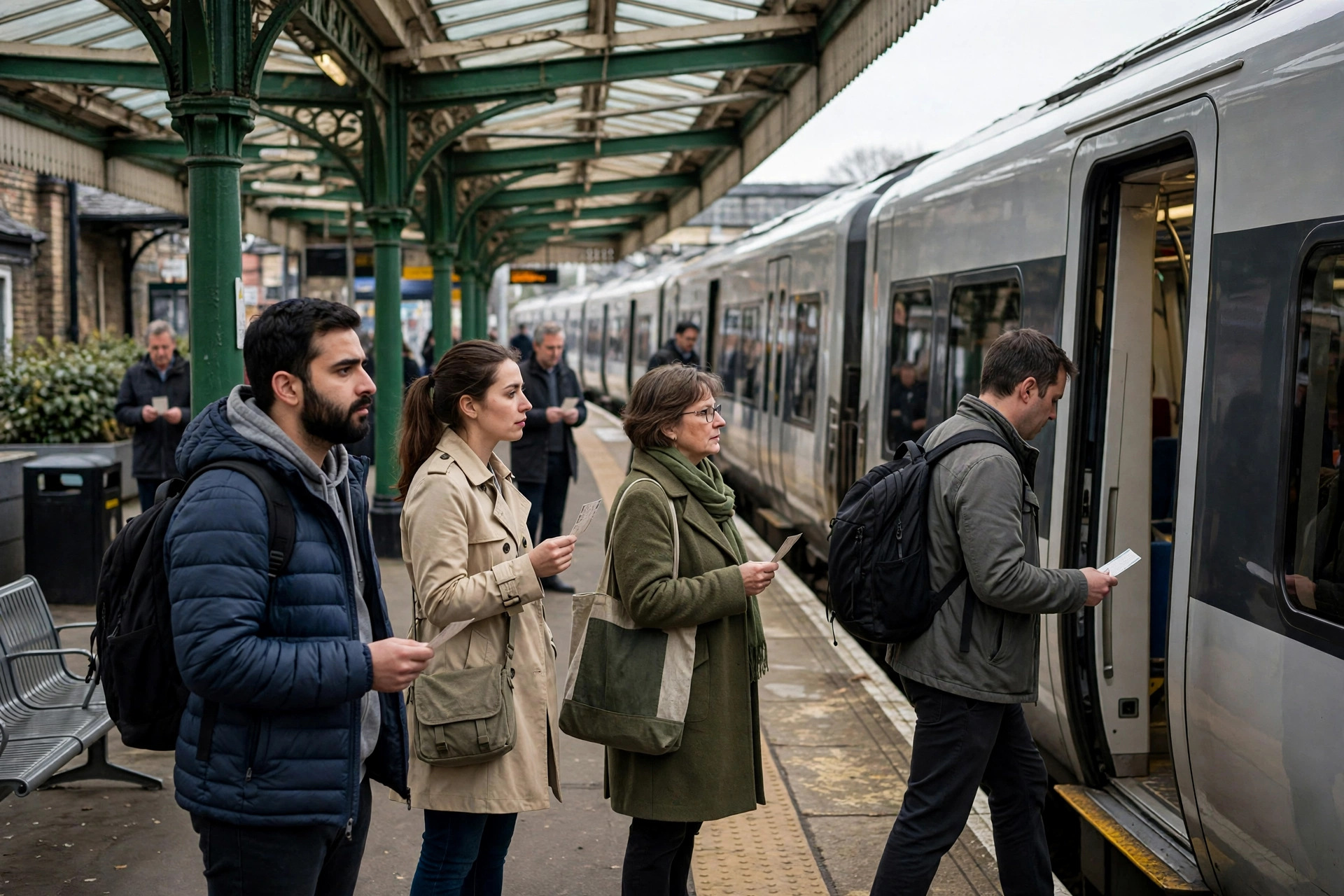
For millions of commuters, students, families and leisure travellers, the train is part of everyday life. It gets people to work, to college, to hospital appointments and to weekends away. So when rail fares change, people notice. This year, however, the headline for passengers in England is unusual: regulated rail fares are frozen in 2026, the first freeze in 30 years, and the freeze lasts until March 2027. For regular travellers, that is a welcome pause in a cost that usually rises. But passengers say the freeze, while welcome, does not answer every question about the railway.
The freeze covers regulated fares in England. These include season tickets, peak commuter returns and off-peak returns on key routes, the tickets many regular travellers rely on. For a commuter buying a season ticket, or a family planning off-peak trips, the freeze means the regulated price they pay does not go up during the freeze period. That certainty helps with household budgeting, especially for people who travel every working day.
What the freeze does not cover matters just as much. Unregulated fares are set by operators and can still change. Advance fares, which are often the cheapest tickets for a specific train, fall into this category. Their prices can vary with demand, time of booking and route, so a passenger who usually buys in advance may still see prices move, even while regulated fares stay put. Understanding which fares are frozen and which are not is therefore essential to understanding what the freeze really means.
Scotland and Wales set their own fares. Decisions about fares there are devolved, so the England freeze does not apply in the same way north of the border or across the Severn. Passengers travelling between nations, or comparing fares in different parts of the UK, need to remember that the system is not uniform. A journey that starts in England and ends in Scotland, for example, involves different fare-setting arrangements, and the rules can feel confusing.
What the freeze means for passengers
For daily commuters, the freeze offers breathing space. Season tickets are a major household expense, and a year without an increase is significant. Commuters who travel at peak times, when trains are busiest and regulated peak returns apply, also benefit. For people who have seen fares rise year after year, the freeze feels like recognition that travel costs matter and that household budgets are under pressure.
Off-peak travellers benefit too. Off-peak returns on key routes are part of the regulated fares covered by the freeze, which helps families, older travellers and leisure passengers planning days out. For someone who travels less often but still relies on the train, knowing the off-peak return price is held can make planning easier and encourage trips that might otherwise feel too expensive.
The freeze does not, however, make all rail travel cheap. Rail fares in Britain have long been a source of complaint, and many passengers feel that even a frozen fare is high compared with incomes or with the cost of driving. A freeze holds the line, but it does not reduce prices, and for passengers on low incomes or travelling long distances, the cost of a ticket can still be a barrier.
Reliability, crowding and the everyday experience
Ask passengers what they want from the railway, and price is only the start. Reliability comes first for many. A train that arrives on time, with enough carriages, makes commuting workable. A service plagued by cancellations forces people to leave earlier, miss connections or work from home when they would rather be in the office. For passengers with caring responsibilities or strict start times, unreliability has real consequences.
Crowding is another concern. Peak trains on busy routes can be standing room only, and passengers who have paid for a season ticket understandably expect a seat, or at least a reasonable journey. More carriages, better timetabling and clearer information about busy services would all help, and passengers say these practical improvements matter as much as fare levels.
Information matters too. When disruption happens, passengers want clear, timely updates, alternative routes and honest explanations. Mobile apps, station screens and announcements have improved, but during major disruption passengers still report confusion. Refunds and compensation for delays are also important. Many passengers do not claim what they are entitled to, either because the process feels complicated or because they do not know it exists. Simpler, automatic compensation is a frequent request.
Simpler ticketing: what passengers want next
If there is one reform passengers consistently call for, it is simpler ticketing. The current system can feel bewildering. Advance, off-peak, anytime, super off-peak, split tickets and railcards all offer different prices and conditions, and the cheapest option is not always obvious. Passengers who buy the wrong ticket can face penalties, even when they made an honest mistake.
Many passengers want a system where the best fare is easy to find, without needing to understand every rule. Contactless payment, already common in some areas, offers a model. Tap in, tap out, and pay the best price for the journey made. Expanding this approach, passengers say, would remove much of the confusion and the fear of getting it wrong.
Split ticketing illustrates the problem. Some passengers save money by buying separate tickets for parts of a journey, even though they stay on the same train. That such savings exist suggests the system is not working as passengers expect. A fairer system, they argue, would price the journey, not the knowledge of how to game it.
Flexibility is increasingly important. Hybrid working means many commuters no longer travel five days a week. Traditional season tickets, designed for daily travel, may not suit someone travelling two or three days a week. Flexible season tickets and carnet-style options have helped some, but passengers say more flexible products, fairly priced, are needed to reflect how people actually travel now.
What happens next
The freeze until March 2027 gives passengers, operators and policymakers time to think about what comes next. The key question is what replaces the freeze when it ends, and whether future fare changes will be linked to improvements in service. Passenger groups argue that any future rise should be justified by better reliability and simpler ticketing, not presented as inevitable.
Longer-term reform of fares is widely discussed. Ideas include simpler fare structures, wider contactless travel, fairer flexible tickets and clearer information at the point of booking. Each idea has costs and trade-offs, and operators warn that fares fund a large share of railway costs. Reducing fares without other funding would mean less investment elsewhere, a point passengers accept but want debated openly.
The freeze is a rare moment of good news on fares for passengers in England, and it deserves recognition. Yet passengers will judge the railway not only by what they pay, but by whether the train turns up, whether they can get a seat, and whether buying a ticket feels fair and simple. Until those things improve alongside fares, the conversation about rail travel will continue, freeze or no freeze.