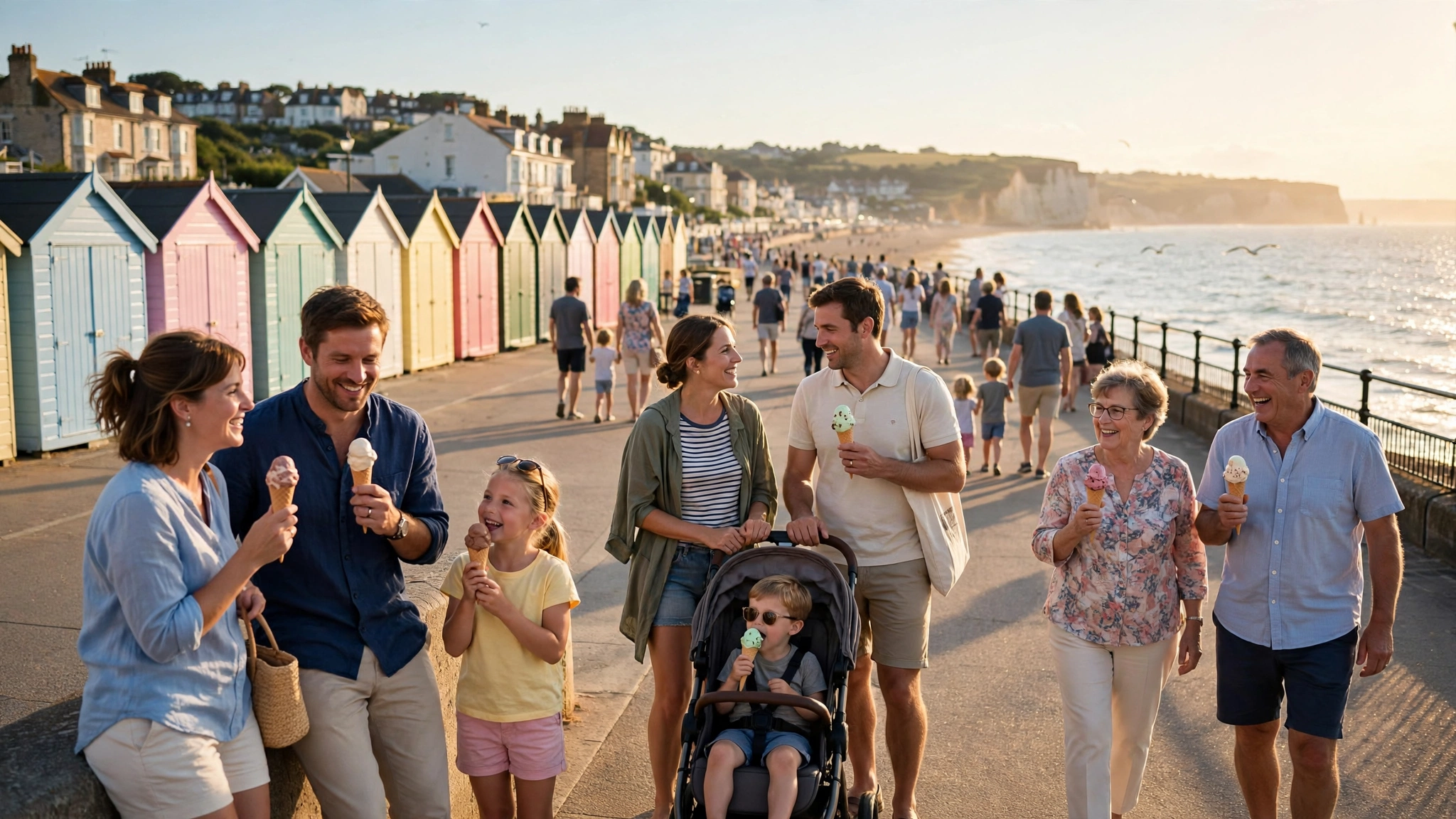
There was a time when a "proper holiday" meant an airport. Increasingly, for British families, it does not. The UK holiday — buckets and spades at the seaside, a cottage in the hills, a caravan with a sea view, a city break by train — has moved from last resort to first choice for a growing number of people, and the trend shows no sign of fading.
Travel businesses call it the staycation boom, but the word undersells what is happening. This is not people settling for second best. Ask families coming back from a week in Cornwall, Northumberland or the Welsh coast, and many will tell you they rediscovered somewhere they had driven past for years on the way to departures. So what is driving it — and if you are tempted, how do you do it well?
The cost of going abroad
The simplest reason is money. Flights, baggage charges, airport parking, transfers, travel insurance and spending money in resorts where prices have climbed steeply all add up to a foreign holiday that looks affordable in the headline and rather different by the time it is paid for. A UK break strips out most of those extras at a stroke: you load the car, you drive, you arrive. For families watching every bill, that difference is decisive.
Closely behind cost comes the hassle factor. Anyone who has queued for hours at a busy airport, juggled passports and boarding passes for three children, or watched a delay eat the first day of a short break knows the appeal of a holiday that starts when you lock your front door. No currency to change, no roaming charges to worry about, no weight limit on the suitcase — and the dog can often come too, which saves kennel fees and a great deal of guilt.
Rediscovering what is on the doorstep
The other force behind the boom is genuine rediscovery. Britain's seaside towns — some tired, many quietly reinvented with good food, independent shops and spruced-up promenades — have been drawing crowds who last visited as children. The national parks offer walking, cycling and scenery that stands comparison with anywhere, and historic cities from Bath to York to Edinburgh make weekend breaks that feel like an event rather than an errand.
For children, the calculation is simpler. A beach is a beach when you are seven, and rock pools, ice cream, arcades and a train ride along the coast deliver exactly the holiday memories adults remember making in the same places a generation ago.
Where people are staying
The boom has spread across every kind of accommodation. Caravan parks — static caravans and lodges as much as tourers — remain the workhorse of the affordable family break, with sites competing on pools, entertainment and entertainment for rainy days. Holiday cottages, booked through agencies and letting platforms, suit families and groups who want their own kitchen and front door. Camping and glamping have surged among younger holidaymakers, and hotels in seaside towns and cities have benefited from the short-break habit: two or three nights, several times a year, rather than one big fortnight.
The weather gamble — and how to plan around it
Every staycation conversation reaches the same point: yes, but the weather. It is the honest risk of holidaying in Britain, and experienced staycationers have stopped pretending otherwise and started planning for it instead. That means packing waterproofs as a matter of course, choosing somewhere with things to do in the rain — a town nearby, indoor attractions, a pool on site — and keeping the itinerary loose enough to grab the good days when they come.
Plenty of families also swear the weather worry is overdone. A week at home in Britain is rarely a total washout, and a coastline in dramatic weather has its own appeal. But the flexibility matters: school-holiday weeks book up early for the most popular areas, so the familiar advice applies — decide early, book early, and read the cancellation terms before you pay.
What the boom means for local economies
Behind the holiday photos sits a serious economic story. Tourism money spent in Britain stays in Britain: it pays the wages in the cafes, pubs, attractions, shops and holiday parks of towns where year-round jobs can be scarce. A busy season supports seasonal work for young people, keeps high streets alive in coastal towns that once depended on a fading trade, and gives small businesses — the ice-cream parlour, the surf school, the farm shop — a reason to invest and stay open.
It brings tensions too. Popular villages feel the pressure of crowds, parking and second homes, and local people priced out of their own housing market have made their feelings clear in more than one community. The places handling the boom best tend to be those spreading visitors across a wider area and a longer season, rather than cramming everything into six summer weeks.
Tips for a cheaper UK break
- Travel in the shoulder season. The weeks just either side of the school summer holidays are usually cheaper and quieter, with everything still open. If your children are not yet at school — or already grown — this is the single biggest saving going.
- Self-cater most of the time. A cottage or caravan with a kitchen turns the food bill into something close to the weekly shop, with a couple of meals out as treats rather than the default.
- Look at railcards and book trains early. Families travelling by train can save significantly with the right railcard, and advance tickets on longer routes are far cheaper than turning up on the day.
- Stay slightly inland. Seafront addresses carry a premium. A village a few miles back from the coast, with the beach a short drive away, can cost notably less.
- Pack for the weather you might get. It sounds obvious, but buying waterproofs and spare jumpers in a resort town at resort prices is how budgets quietly unravel.
What happens next
The staycation has survived the reopening of foreign travel, which suggests it is a habit rather than a stopgap. Foreign holidays are not going anywhere either — the winter sun will always have its pull — but the automatic assumption that a real holiday requires a runway has gone. Families have learned what was always true: some of the best beaches, walks, towns and tables in Europe were a car journey away all along. The boom is simply what happens when millions of people notice at the same time.