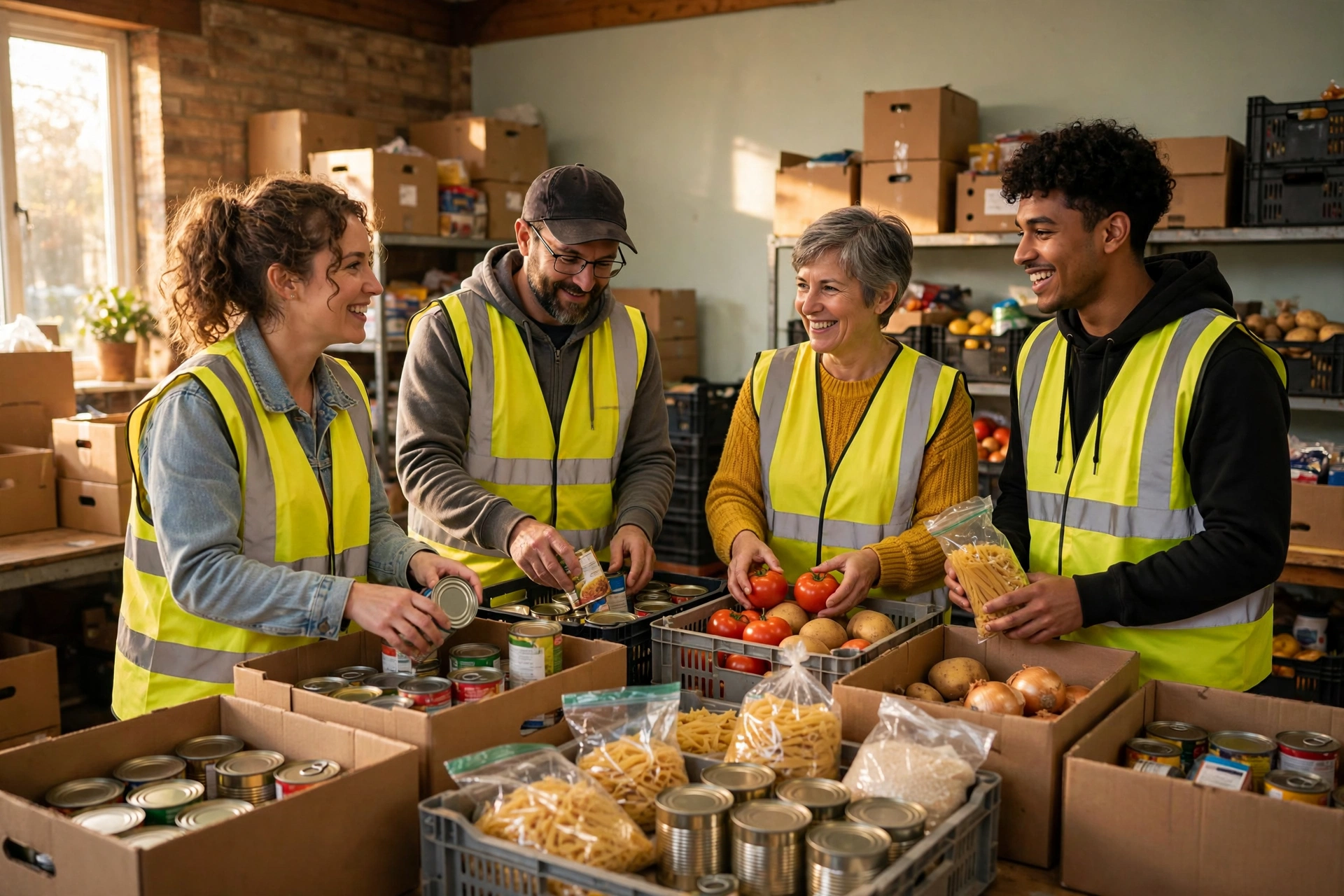
Every day, in every town in the UK, volunteers keep things running that would otherwise stop. They staff food banks, drive people to hospital appointments, coach children's sports teams, run charity shops, visit lonely older people, and keep local libraries and nature reserves open. Most of them started the same way: with a spare few hours and a vague feeling that they wanted to help.
Volunteering is often described as giving your time, and it is. But ask most volunteers and they will tell you they get at least as much back as they give: new friendships, new skills, a sense of purpose, and a connection to the community that is hard to find any other way. If you have ever thought about it, there has never been a better time to start.
Why Volunteering Matters
The value of volunteering goes far beyond the hours worked. For the organisations involved, volunteers are essential. Many charities could not afford to pay for all the work their volunteers do, and without them, services would shrink or close. A volunteer driver who takes someone to a medical appointment, or a volunteer who packs parcels at a food bank, is directly improving someone's day — sometimes someone's life.
For volunteers themselves, the benefits are well documented. People who volunteer regularly often report feeling happier and more connected. Volunteering gets you out of the house, introduces you to people outside your usual circles, and gives you a reason to get up in the morning that has nothing to do with a pay cheque. For people who are retired, new to an area, between jobs, or simply feeling a bit isolated, that structure and social contact can make a real difference.
It can also be good for your working life. Volunteering builds skills that employers value: teamwork, communication, problem-solving, and reliability. If you are changing career, returning to work after a break, or just starting out, a volunteering role can give you recent experience to talk about and referees who have seen you in action.
The Kinds of Roles Out There
One of the biggest misconceptions about volunteering is that it all involves standing in a charity shop or rattling a collection tin. Those roles exist and matter, but they are only a tiny fraction of what is available.
Practical roles include driving, gardening, DIY and maintenance, cooking, and helping at events. People-facing roles include mentoring young people, befriending older or isolated people, answering helpline calls, and supporting people in hospitals, hospices, and care homes. Animal lovers can volunteer at shelters and wildlife centres. Those who prefer to work from home can help with admin, social media, translation, fundraising, or governance as a trustee or school governor.
There are also one-off and occasional opportunities: marshalling at a fun run, helping at a festival, joining a beach clean, or giving a few hours at a community event. These are a good way to try volunteering without committing to a regular slot.
Where to Start Looking
The easiest place to begin is in your own neighbourhood. Walk down your high street and look at the charity shops, community centres, and libraries — most will have a notice about volunteers, and a quick chat with the manager can tell you what they need. Places of worship, sports clubs, and schools are often looking for help too.
Online, the national volunteering databases let you search by postcode, interest, and time commitment, and they list thousands of roles across the UK. Your local volunteer centre — most areas have one — can match you with roles that suit your interests and availability, and can answer questions about what is involved.
Do not overlook the organisations you already use. If your child attends a youth club, if you walk your dog in a local park, or if a relative has been helped by a particular charity, those organisations will value a volunteer who already understands what they do.
Choosing the Right Role for You
The best volunteering role is one you will actually enjoy and stick with. Think honestly about what you have to offer and what you want from it. How much time can you realistically give — an hour a week, a morning a fortnight, a full day a month? What are you good at, and what would you like to learn? Do you want to work with people, or would you rather be outdoors, or behind the scenes?
Be honest about the commitment. Organisations plan around their volunteers, so it is better to offer two hours a week reliably than to promise two days and keep cancelling. Most roles are flexible, and many organisations are happy to work around shift patterns, childcare, and holidays. If a role does not suit you, say so — there is no shame in trying something and finding it is not for you. A good organisation would rather help you find a better fit than lose you altogether.
It is also worth thinking about what you want to get out of it. If you want to learn new skills, say so. If you want to meet people, say so. If you simply want to help quietly in the background, that is fine too. Volunteering works best when it suits both sides.
What to Expect When You Begin
Most organisations will have a simple application process: a short form, an informal chat, and possibly references. Some roles — particularly those working with children, vulnerable adults, or in healthcare settings — require a criminal record check. This is routine and nothing to worry about; the organisation will arrange it and explain the process.
You should receive an induction covering what the role involves, who to report to, and the organisation's basic policies, including health and safety and confidentiality. You should also be told what expenses you can claim — many organisations reimburse travel costs, and some cover lunch for longer shifts. Never feel embarrassed about claiming expenses; it is standard practice, and it means volunteering does not cost you money.
Remember that you are not an employee, and nobody expects you to be an expert on day one. Ask questions, take your time, and let the organisation know if you need support or if something is not working for you.
Small Steps, Real Difference
You do not need a grand plan to start volunteering. Pick one organisation, make one phone call, or fill in one form. Offer a few hours, show up, and see how it feels. Many volunteers say they meant to try it for a month and are still there years later — not because they feel obliged, but because they found something that mattered to them.
Communities are built by the people who show up. A few hours of your week could be the difference between a service staying open or closing, a person feeling lonely or feeling remembered, or a local project succeeding or stalling. That is a remarkable return on a few hours of your time.