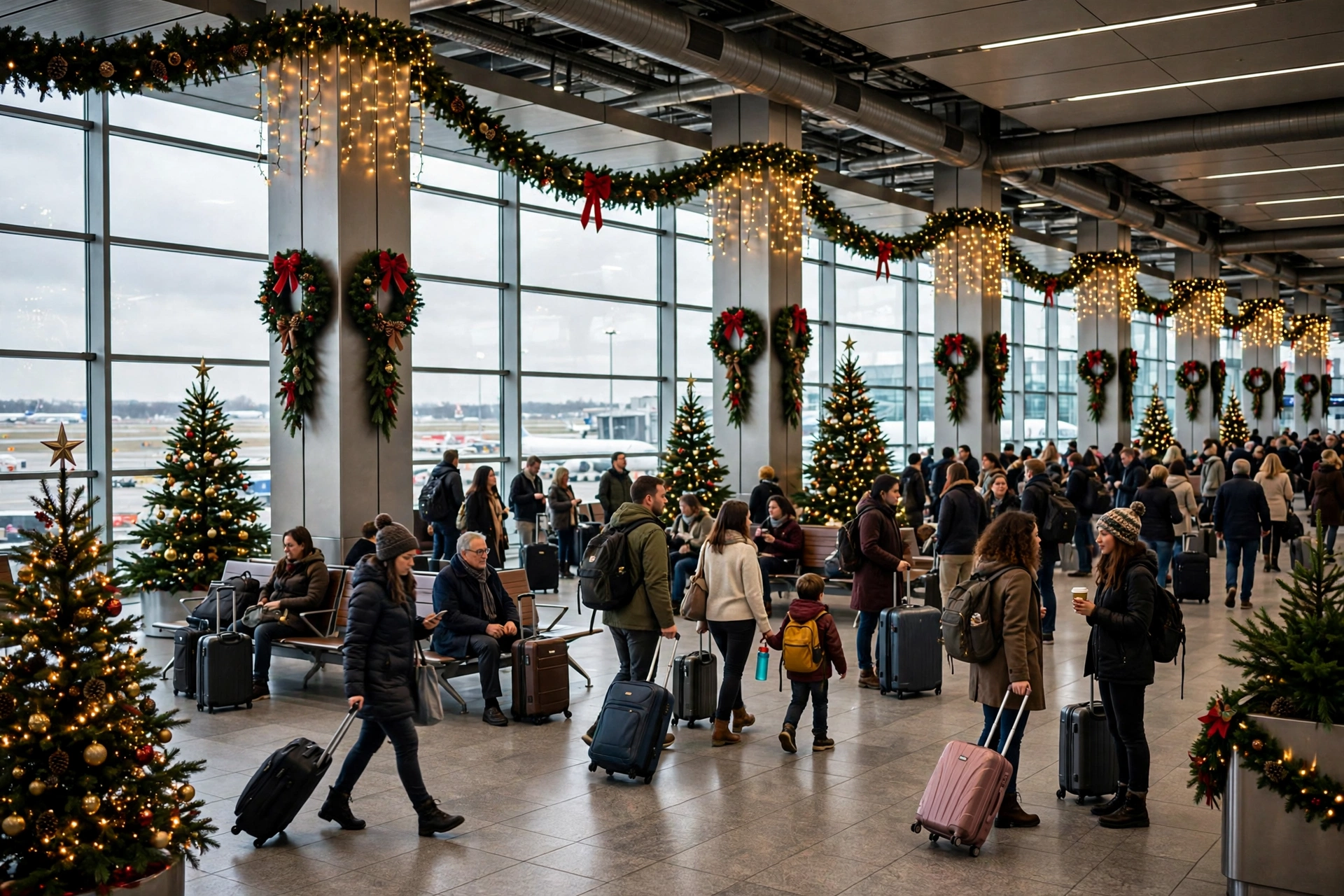
There is a particular feeling in an airport departure hall in the days before Christmas. Families gather with suitcases and wrapped presents, friends reunite at arrivals, and the announcements seem to come in every language at once. For many people, the festive getaway is the highlight of the winter, whether it means flying home to family, escaping to winter sun, or heading to a snowy city for the holidays. Behind the scenes, airports are preparing for one of the busiest periods of the year, and the scale of that preparation is enormous.
The Christmas rush matters because so much depends on it going well. A delayed flight can mean a missed family dinner. A lost bag can mean presents that never arrive. For airport staff, airlines and border teams, the festive period brings long shifts, high passenger numbers and little room for error. Planning starts months in advance, and by the time passengers arrive, hundreds of small decisions have already been made.
This year, as in every year, the pattern is familiar. The days before Christmas are the busiest for departures, as people travel to be with family or start holidays. The days after Christmas see a second wave, as holidaymakers depart and others return home. Airports must handle both waves, often with reduced staffing elsewhere and with winter weather adding an extra layer of uncertainty.
How airports prepare for the rush
Preparation begins with staffing. Airports recruit seasonal workers, extend opening hours for shops and services, and schedule extra staff at check-in, security and baggage handling. Airlines add flights on popular routes and use larger aircraft where demand allows. Ground handlers, who load bags, clean aircraft and guide planes on the ground, also increase their teams for the festive period.
Security is a major focus. More passengers mean longer queues unless staffing and lanes are increased. Airports encourage passengers to arrive in good time, prepare liquids and electronics for screening, and check hand luggage rules before travelling. Small preparations by passengers, such as emptying pockets and removing belts, can make a real difference to queue times when thousands of people are passing through.
Baggage handling is another pressure point. At Christmas, passengers often carry extra luggage, including gifts, winter clothing and sports equipment. Baggage systems must cope with higher volumes, and handlers must deal with awkward items that do not fit standard processes. Airports advise passengers to label bags clearly, keep valuables and essentials in hand luggage, and allow extra time for bags to arrive on return flights.
Border control and immigration also prepare for peaks. Families arriving together, passengers with different passport types and travellers needing assistance all pass through border checks. Airports work with border teams to staff desks at busy times, while passengers are reminded to check passport validity and any entry requirements for their destination well before travel day.
The passenger experience at Christmas
For passengers, the festive rush brings both excitement and stress. Airports try to make the experience enjoyable, with Christmas decorations, seasonal food, carol singers in some terminals and special events for children. Shops stock festive gifts, restaurants offer seasonal menus, and lounges provide a calmer space for those willing to pay for it. For children, the airport itself can feel like part of the holiday.
But the practical side of travel can be tiring. Early starts, long queues and crowded departure halls test patience, especially for families with young children or older travellers. Delays, when they happen, feel worse at Christmas, because the stakes are higher. Missing a connection or arriving late can disrupt plans that have been made months in advance.
Families travelling with children face particular challenges. Pushchairs, car seats, baby food and entertainment for the flight all need planning. Airports offer family lanes at security in many terminals, baby changing facilities and play areas, but parents still need to allow extra time. Experienced family travellers advise packing snacks, downloading films in advance and keeping a change of clothes in hand luggage, in case checked bags are delayed.
Travellers with additional needs also need careful preparation. Passengers who require assistance should book it in advance, through their airline, so that airport teams can plan. Hidden disabilities, mobility needs and medical equipment all require coordination, and airports say early booking is the best way to ensure help is ready on the day. At Christmas, when demand for assistance is high, this matters even more.
Winter weather and disruption
Winter weather is the great unknown of festive travel. Fog, snow, ice and storms can disrupt flights across the UK and Europe, sometimes with little warning. Airports have de-icing equipment, snow clearance teams and contingency plans, but severe weather can still cause delays and cancellations. Airlines must balance safety with the desire to keep passengers moving, and safety always comes first.
When disruption happens, communication becomes crucial. Passengers want clear information about what is happening, what their options are, and what happens next. Airlines use apps, texts and airport screens to update passengers, but during widespread disruption information can lag behind events. Passengers are advised to check flight status before leaving home, keep phones charged, and know their rights around rebooking, refreshments and accommodation when delays are long.
Tips for a smoother festive getaway
Experienced travellers share similar advice for the Christmas rush. Arrive in good time, but not excessively early, as airports publish recommended arrival times for a reason. Check in online where possible, weigh bags at home, and keep travel documents, medicines and valuables in hand luggage. Wear layers that are easy to remove at security, and keep liquids in a clear bag ready for screening.
Packing gifts needs care. Wrapped presents in hand luggage may need to be opened at security, so many travellers advise carrying gifts unwrapped and wrapping them on arrival, or placing them in checked luggage. Fragile items should be well protected, and passengers should check airline rules for batteries, candles and other items that may be restricted.
What happens next
After the festive rush, airports review what worked and what did not. Passenger numbers, queue times, baggage performance and disruption handling are all analysed, and lessons feed into planning for the next peak, whether that is Easter, summer or the following Christmas. Airlines also review routes, adjusting schedules based on demand and performance.
For passengers, the festive getaway remains a cherished tradition, despite its stresses. The sight of arrivals halls filling with reunions, the excitement of a first holiday, and the relief of landing home for Christmas make the queues and early starts worthwhile for most. Airports know this, and their festive preparations aim to protect that experience, even at the busiest time of year.
The message from airports is consistent: plan ahead, arrive in good time, check before you travel, and allow for the unexpected. Do that, and the Christmas getaway, with all its crowds and carols and suitcases, can be what it should be, the start of the holiday, not an obstacle to it.