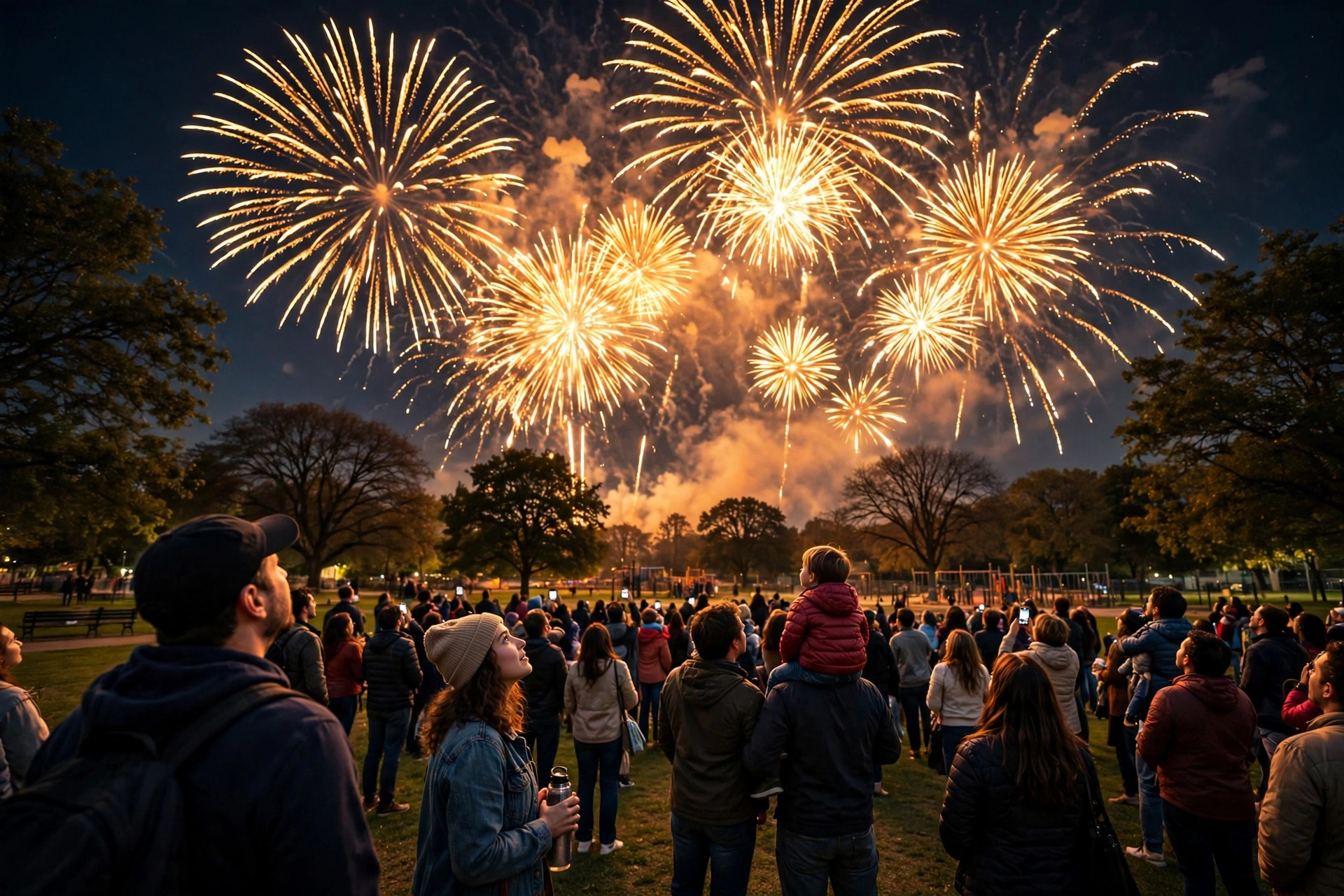
Bonfire Night 2026 falls on Thursday 5 November 2026, and councils, charities and community groups across the United Kingdom are announcing their fireworks displays, bonfires and family events for the season. For many towns and cities, the celebrations are among the largest public gatherings of the year, drawing thousands of people to parks, seafronts and showgrounds for an evening of colour, noise and tradition. Organisers say the message this year is consistent: plan ahead, book tickets where required, check the details on the organiser's own page, and put safety first, particularly where children and pets are involved.
The calendar quirk of Bonfire Night falling on a Thursday shapes the pattern of events. While some displays will take place on 5 November itself, most of the biggest gatherings move to the weekend that follows, when families find it easier to attend and organisers can run larger, better-staffed events. Saturday 7 November is expected to be the busiest night of the season, with major displays in London, the south west, the north west and beyond. That weekend concentration means that popular events can sell out, that roads and public transport around venues will be busy, and that anyone hoping to attend a flagship display should not leave arrangements until the last moment.
Where the big displays are happening
In London, Blackheath remains one of the best-known free large-scale displays, and it is expected to draw a very large crowd on Saturday 7 November. Alexandra Palace and Battersea Park are running events across the weekend of 7 and 8 November, offering a choice of nights for families who want to avoid the busiest evening. For those who prefer to mark the night itself, Wimbledon Park is among the displays taking place on Thursday 5 November, and Coram's Fields in central London offers a free display on the night itself, a welcome option for families watching costs.
Beyond the capital, the pattern is similar. Bath and Manchester parks are among the venues staging major displays on Saturday 7 November, while Cheltenham is also listed among the busiest weekend events. Lewes, in East Sussex, remains famous for its distinctive Bonfire Night celebrations on 5 November itself, with its bonfire societies, processions and traditions drawing visitors from far beyond the town. The Lewes event is unlike a standard fireworks display, and visitors are strongly advised to check local guidance, arrive early and expect very large crowds and road closures.
Tickets, travel and planning ahead
Booking in advance is one of the strongest pieces of advice for this year's season. Many large displays now operate on a ticketed basis, even where entry has traditionally been free, in order to manage crowd numbers and keep sites safe. Tickets for popular venues can sell out days ahead, and some events operate a strict cap on numbers. Families who turn up without a ticket risk being turned away at the gate, after a long journey and with disappointed children. Checking whether tickets are required, and booking them early, is therefore essential.
Travel planning matters just as much. Fireworks venues are often in parks or open spaces with limited parking, and surrounding streets can become congested quickly as the display time approaches. Public transport, walking or cycling are often recommended by organisers, and some councils lay on additional services or publish travel advice for the night. Arriving early has several advantages: a better viewing spot, shorter queues for food and facilities, and a less stressful journey home, when crowds disperse at once. Warm clothing, waterproofs and sturdy footwear are also worth remembering, as November evenings are cold and display sites are often on open, muddy ground.
Fireworks law and safety warnings
Safety warnings this year rest on a clear legal framework. In England, fireworks may not be set off between 11pm and 7am, except on Bonfire Night itself, when the cut-off is midnight. That later cut-off recognises the tradition of evening celebrations, but it does not give a free rein: fireworks must still be used responsibly, at a safe distance from people, property and animals, and never in a built-up area where they could cause alarm or damage. Registered sellers may sell fireworks for private use between 15 October and 10 November, a window that covers the Bonfire Night season. Outside that period, sales for private use are more restricted.
Fire services and safety organisations repeat the same core advice each year, because the same kinds of incidents recur. Only buy fireworks from reputable sellers, store them safely and away from sources of heat, read the instructions for each firework rather than assuming they are all the same, and never return to a firework that has failed to go off. Alcohol and fireworks are a dangerous combination, and adults organising a home display are urged to keep the two apart. Bonfires, where they are part of a display, should be built well away from buildings, trees and fences, and should be checked for hedgehogs and other wildlife before lighting.
Pets are a particular concern. The noise and flashes of fireworks cause severe distress to many dogs, cats and other animals, and veterinary organisations advise owners to keep pets indoors during display nights, close curtains, provide a safe hiding place, and keep the television or radio on to mask the sound. Walks should be taken earlier in the day, and owners should never take a dog to a fireworks display in the hope that it will get used to the noise. For livestock and horses, owners are advised to check fields, stables and fencing in advance, and to stay with animals where possible during nearby displays.
What happens next
As November approaches, councils and organisers will continue to confirm final details, and some smaller community displays may be announced later than the flagship events. Readers planning to attend any display should therefore check the organiser's own page close to the date, rather than relying on a listing published weeks earlier. Start times, ticket availability and any changes caused by weather can all be updated at short notice, and a quick check on the day can save a wasted journey.
The season also brings a reminder about consideration for neighbours. Fireworks set off late at night, over several evenings, can disturb people who are ill, elderly, working night shifts or caring for young children, as well as pets. Keeping private displays to a reasonable hour, warning neighbours in advance, and sticking to the legal hours are simple courtesies that help the whole community enjoy the season. Bonfire Night has endured for centuries because it brings people together, and the best celebrations are those where excitement is matched by care: a spectacular display, enjoyed safely, with everyone home warm and unharmed at the end of the night.