Learning a new skill is one of the most satisfying things an adult can do. It could be a language, a musical instrument, cooking, coding, photography, woodwork, or anything else you have always meant to try. The obstacle is usually not talent or time — it is the assumption that learning costs a lot of money.
It does not have to. The UK is full of free and low-cost ways to learn, many of them run by libraries, councils, charities, and community groups. Here is where to find them, and how to make learning stick.
Start at the Library
The public library is the most underused learning resource in the country. Every library offers far more than books: most now provide free computers and internet, study space, and a programme of workshops and classes. Many libraries run conversation groups for language learners, coding clubs, craft sessions, and talks by local experts.
Your library card also unlocks a surprising amount from home. Most library services offer free access to online courses, language-learning apps, newspapers, and reference resources. Ask a librarian what is available — they know their collections, and helping people learn is quite literally their job.
If you want to learn a practical skill, a library book is still one of the best places to start. A good beginner's book on photography, cookery, gardening, or DIY costs nothing to borrow and gives you the foundations before you spend a penny on equipment or classes.
Free and Low-Cost Courses
There are more free courses available than most people realise. The Open University offers a large library of free short courses online, covering everything from languages and business to science and history. Many other universities publish free introductory courses too, and several national charities run free courses in digital skills, money management, and employability.
Local councils are another rich source. Most council adult education services run subsidised evening and weekend classes — languages, art, cookery, crafts, computing, first aid — at prices far below commercial courses, with reduced fees for people on low incomes or certain benefits. Your council's website will list what is on offer in your area, and many courses can be booked online.
Community centres, churches, mosques, and neighbourhood groups often run informal classes too: sewing circles, cooking clubs, dance sessions, and conversation groups. These are usually cheap or free, and they come with a social side that a solo online course cannot match.
Learn by Doing — and by Volunteering
Some skills are best learned by doing, not by studying. If you want to learn gardening, volunteer at a community garden. If you want to learn about fundraising or events, volunteer for a local charity. If you want to improve your public speaking, join a speaking club. Volunteering gives you real practice, real feedback, and real people to learn from — and it looks good on a CV too.
The same applies to creative skills. Want to learn photography? The best teacher is a camera and a reason to use it — a local project, a club, a challenge to take a photo every day. Want to learn to cook? Cook one new dish a week, and invite someone to eat it. Skills grow through practice, and practice is free.
Use Video Tutorials Wisely
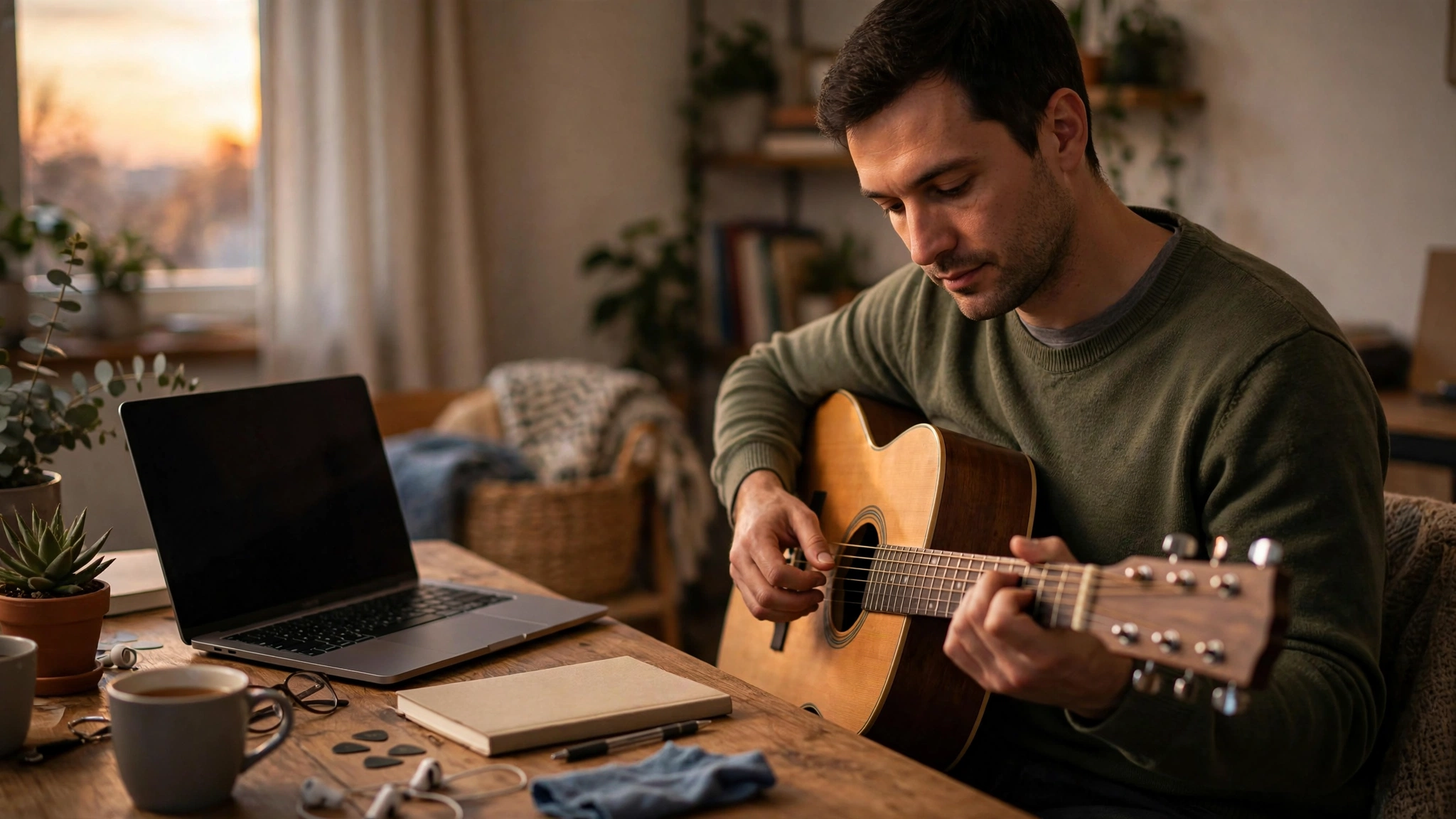
Video tutorials are a wonderful resource — and a trap. It is easy to watch twenty videos about playing the guitar and never pick the instrument up. The rule is simple: for every video you watch, spend at least as long practising. Watch one lesson, then put the phone down and try it.
Look for structured series rather than random clips. A beginner's course that builds lesson by lesson will take you further than a hundred disconnected videos. Many skilled teachers publish full beginner courses for free, and libraries and colleges often recommend reliable channels. If a tutorial promises mastery in a week, be sceptical. Real skills take weeks and months, and that is normal.
Keep Track of What You Learn
It is worth keeping a simple record of your progress. A notebook, a folder on your phone, or a few photos of your work — a finished dish, a finished project, a certificate — gives you something to look back on when motivation dips. It also helps you see how far you have come, which is easy to forget when you are learning week by week. If you ever decide to turn a hobby into paid work or further study, that record becomes evidence of what you can do.
Make It Stick: Small, Regular, and Social
The secret to learning is not motivation — it is routine. Fifteen minutes a day beats three hours once a month. Pick a regular slot — first thing in the morning, your lunch break, the train home — and protect it. Keep your materials visible: the guitar by the chair, the language app on your home screen, the sketchbook on the table.
Set small, concrete goals. Not "learn Spanish", but "hold a five-minute conversation about my weekend". Not "learn to code", but "build a simple web page". Small goals give you wins, and wins keep you going.
Finally, find someone to learn with. A friend, a class, a club, an online community — learning with others keeps you accountable, gives you someone to practise with, and makes the whole thing more fun. The cheapest way to learn a new skill is rarely the loneliest one. Start with the library, find a class, practise a little every day, and give it time. You may be surprised how far free can take you.