



Introduction
In the long and storied history of the British monarchy, few heirs to the throne have assumed their role with as much quiet determination and modern sensibility as Prince William. Born to be king, yet raised with a yearning for as normal a life as possible, the Prince of Wales has spent four decades preparing for a destiny he did not choose but has never once shirked. The grandson of a beloved queen and the son of a king determined to streamline the institution, William represents a bridge between the stoic, distant monarchy of the past and the more approachable, emotionally intelligent institution of the future. For the British public, he is not just a future sovereign but a husband, a father of three young children, a former air ambulance pilot, and a passionate advocate for mental health. His journey has been marked by profound tragedy, unimaginable public scrutiny, and a steadfast commitment to service. As he prepares for his eventual accession, Prince William embodies the steady, reassuring presence that the monarchy has always needed.
Early life and the weight of the heir
Prince William Arthur Philip Louis was born on 21st June 1982 at St Mary’s Hospital in Paddington, London, the first child of the then Prince Charles and Diana, Princess of Wales. From the moment of his birth, he was destined for a unique and burdensome role: he was second in line to the throne, a position he has held for his entire life. His early years were a whirlwind of public fascination. The world watched as he took his first steps, started his first day at Wetherby School, and navigated the intense media scrutiny that would ultimately contribute to his parents’ unhappy marriage. The young prince was known for his blond hair, his shy smile, and a mischievous streak that reminded many of his mother. He was just fifteen years old when his mother died in a car crash in Paris in August 1997, an event that shattered his world and forced him to walk behind her coffin in a funeral watched by billions. That walk, alongside his younger brother Prince Harry, their father, and their grandfather the Duke of Edinburgh, remains one of the most heartbreaking images in modern royal history. It forged in William a steely resilience and a lifelong distrust of the tabloid press.
Education and the search for normality
Despite his status as a future king, Prince William was determined to carve out as normal an existence as possible. After Wetherby School, he attended Ludgrove School in Berkshire, where he was encouraged to participate in sports and drama alongside his academic studies. He then followed in his father’s footsteps to Eton College, the prestigious boys’ boarding school in Windsor. At Eton, he was popular and well-liked, known for his ability to fit in despite the constant presence of royal protection officers. He took a gap year after Eton, spending time in Belize, Chile, and Africa, experiences that broadened his worldview and deepened his interest in conservation. In 2001, he enrolled at the University of St Andrews in Scotland, choosing to study art history before switching to geography. It was at St Andrews that his life changed forever. He met Catherine Middleton, a fellow student from Berkshire, and the two began a relationship that would be conducted under the most intense media glare. Their decision to live together in a shared student flat was a bold statement of modernity, a rejection of the stuffy conventions of previous royal generations.
The royal duty and the air ambulance years
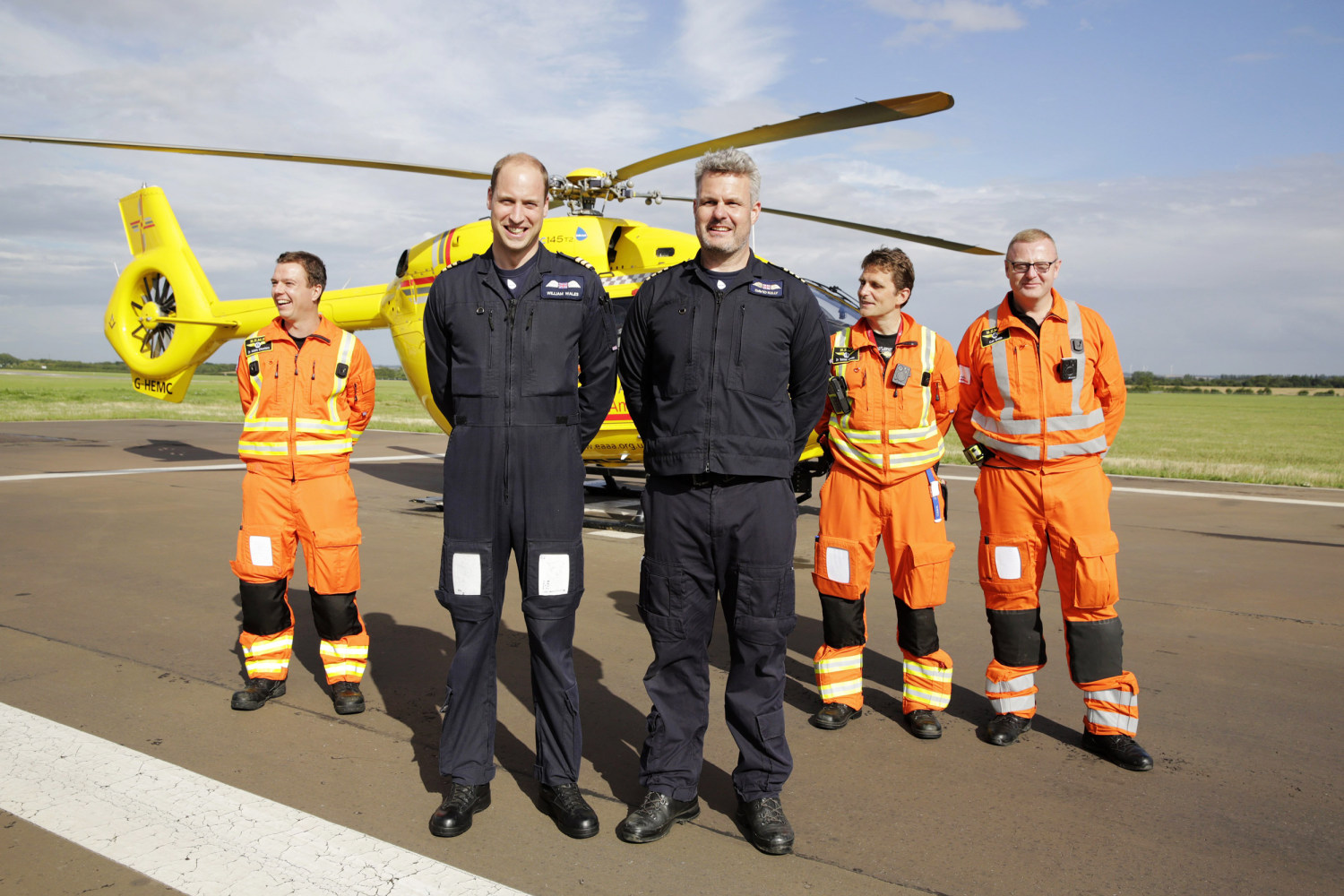
After graduating from St Andrews with a 2:1 degree in geography in 2005, Prince William embarked on a military career. He followed his younger brother through the Royal Military Academy Sandhurst, graduating as an army officer and joining the Blues and Royals regiment. He served as a troop commander and later trained as a pilot, qualifying to fly the Apache helicopter. His military service was not a ceremonial role; he served operationally, including a tour of duty in the Falkland Islands. After leaving the army, William made the decision to train as a pilot for the East Anglian Air Ambulance, a role he took extremely seriously. For two years, he flew missions across East Anglia, responding to medical emergencies and often landing in farmers’ fields or on motorways. The job paid a salary, which he donated to charity, and it gave him a taste of a normal working life that he has always craved. Colleagues described him as a dedicated, skilled pilot who never traded on his royal status. The experience profoundly shaped his understanding of emergency services, trauma, and the importance of mental health support for first responders.
The wedding of the century and family life
The question of when Prince William would marry Catherine Middleton was the subject of fevered speculation for years. The couple had endured a brief separation in 2007, but they reconciled and, in November 2010, announced their engagement. The wedding took place on 29th April 2011 at Westminster Abbey, an event watched by an estimated two billion people worldwide. It was a moment of national celebration and optimism, a bright spot after years of economic gloom. Catherine became the Duchess of Cambridge, and the couple were given the title Earl and Countess of Strathearn for use in Scotland. They took up residence at Anmer Hall in Norfolk, a country house on the Queen’s Sandringham estate, where they sought to give their children as normal an upbringing as possible. Their first child, Prince George, was born on 22nd July 2013. Princess Charlotte followed on 2nd May 2015. Prince Louis arrived on 23rd April 2018. The young family became the most photographed and beloved royal unit since William’s own childhood, but William and Catherine were determined to protect their children from the excesses of the press, releasing only carefully curated official photographs.
The Duke of Cambridge and the mental health mission
As he matured into his royal role, Prince William found his cause: mental health. Alongside his wife and his brother, he launched the Heads Together campaign in 2016, a groundbreaking initiative designed to end the stigma surrounding mental health and encourage people to speak openly about their struggles. William has spoken candidly about his own experiences, including the grief of losing his mother and the pressures of royal life. He has described the “screaming abdabs” he felt while working as an air ambulance pilot, and he has been a vocal advocate for better mental health support for farmers, veterans, and emergency workers. The campaign, in partnership with charity leaders, helped to change the national conversation around mental health, culminating in the successful hosting of the 2024 Mental Health Summit at Buckingham Palace. In 2024, William launched Homewards, a five-year, locally led programme designed to demonstrate that homelessness can be ended. This ambitious project, inspired by his mother’s work with the homeless, aims to create tailored plans across six UK locations to prevent and reduce homelessness. It is perhaps the most significant personal project of his royal career to date.
The Prince of Wales and the changing of the guard
The death of Queen Elizabeth II on 8th September 2022 marked a seismic shift in the British monarchy. Her eldest son became King Charles III, and William inherited the ancient title of Prince of Wales, a designation that carries immense historical weight. The new Prince of Wales and his wife, now the Princess of Wales, moved their primary residence to Adelaide Cottage in Windsor, closer to the King and to their children’s school. The title change was not merely ceremonial. William was now first in line to the throne, and the responsibilities of that position intensified. He took on new patronages from his grandmother and his father, including the Royal Marsden Hospital and the Welsh Guards. He began to represent the King at major state occasions, including the state funeral of Queen Elizabeth II and the coronation of King Charles III in May 2023. The transition has been handled with characteristic grace. William has shown no impatience for the throne, instead focusing on his family and his charitable work while supporting his father in his new role.
A comparative look at Prince William’s key milestones
The table below outlines the major milestones in Prince William’s life, from his birth to his accession as Prince of Wales, illustrating the steady progression of a man shaped by duty and tragedy.
| Year | Milestone | Age |
| 1982 | Born at St Mary’s Hospital, Paddington | Newborn |
| 1997 | Mother Diana, Princess of Wales, dies in Paris car crash | 15 |
| 2001 | Enrols at University of St Andrews | 19 |
| 2005 | Graduates from St Andrews with geography degree | 23 |
| 2011 | Marries Catherine Middleton at Westminster Abbey | 28 |
| 2013 | Birth of first child, Prince George | 31 |
| 2015 | Becomes a full-time working royal | 33 |
| 2020 | Steps back from front-line royal duties during pandemic | 38 |
| 2022 | Becomes Prince of Wales following accession of King Charles III | 40 |
| 2024 | Launches Homewards homelessness project | 42 |
The relationship with his brother Prince Harry
No discussion of Prince William’s adult life is complete without addressing the fractured relationship with his younger brother, Prince Harry. The two brothers were once inseparable, united by the shared trauma of their mother’s death and the unique pressures of royal life. They worked together on the Heads Together campaign, and their wives, Catherine and Meghan, were initially close. However, the relationship deteriorated dramatically following Harry’s decision to step back from royal duties in 2020 and move to California. The publication of Harry’s memoir, ‘Spare’, in 2023, contained deeply personal allegations about William, including a physical altercation between the brothers. William has never publicly responded to the claims, following the royal family’s long-held mantra of “never complain, never explain”. Privately, those close to him say he is hurt but resigned. He has reportedly told friends that he still loves his brother but that trust has been broken. The brothers have been seen together at family events, including the coronation and the funeral of their grandmother, but the warmth of their earlier relationship has not returned. For William, the priority remains his duty to the Crown and the protection of his own young family.
The Princess of Wales and the cancer diagnosis
The year 2024 brought one of the most challenging periods of Prince William’s life. His wife, Catherine, was diagnosed with cancer following a major abdominal surgery. The news was kept private while the couple processed the diagnosis and informed their three young children. In a deeply personal video message released in March 2024, the Princess of Wales revealed her diagnosis and announced that she was undergoing preventative chemotherapy. William immediately scaled back his public engagements to focus on supporting his wife and children. He was seen driving her to hospital appointments, attending parents’ evenings at the children’s school, and maintaining as normal a family life as possible under extraordinary circumstances. The experience has visibly deepened William’s commitment to his family and has given him a new perspective on the fragility of health. He has spoken privately about the importance of being present, of not taking a single day for granted. The Princess of Wales announced in September 2024 that she had completed her chemotherapy and was focused on staying cancer-free, a moment of relief that was met with widespread public support. The ordeal has, if anything, strengthened William’s bond with the British people, who have seen him not as a distant prince but as a worried husband and father.
The Earthshot Prize and environmental legacy
One of Prince William’s most significant and enduring contributions is the Earthshot Prize, a global environmental award launched in 2020. Inspired by President John F Kennedy’s Moonshot challenge, the Earthshot Prize aims to discover and scale up innovative solutions to the planet’s greatest environmental challenges, from climate change to biodiversity loss. Each year, five winners receive one million pounds to scale their projects. The prize has awarded over fifty winners and finalists across its first five cycles, with projects ranging from regenerative agriculture in Kenya to solar-powered refrigeration in India. William has described the Earthshot Prize as his “moonshot” to repair the planet within a decade. The annual awards ceremony has become a major event on the royal calendar, attracting A-list celebrities, global leaders, and environmental pioneers. Unlike many environmental initiatives, the Earthshot Prize is relentlessly optimistic, focusing on solutions rather than doom. It reflects William’s belief that the younger generation will not forgive a failure to act on climate change and that the monarchy has a role to play in driving positive change. The prize is widely seen as William’s signature achievement, the cause he will champion for the rest of his life.
The future as King William V
The question of when Prince William will become king is one that cannot be answered with certainty, dependent as it is on the health and longevity of his father, King Charles III. What is clear, however, is that William is preparing diligently for the role. He has taken on an increasing number of state duties, including representing the King at official functions abroad. He has developed a close working relationship with the Prime Minister and senior government officials. His vision for the monarchy is said to be smaller, leaner, and more focused on direct charitable impact rather than grand ceremonial display. He has reportedly told friends that he wants his children to have as normal a childhood as possible, delaying the full weight of royal duty until they are older. When he does ascend the throne, he will become King William V, the first monarch of that name since William IV, who reigned from 1830 to 1837. He has indicated that he will not make sweeping changes overnight but will continue his father’s work of modernising the institution. For the British public, the prospect of a King William offers continuity and reassurance: a steady, devoted, and deeply human future head of state.
Conclusion and frequently asked questions
Prince William has spent his entire life preparing for a role he did not ask for but has never once rejected. From the tragedy of his mother’s death to the joy of his own family, from the cockpit of an air ambulance to the global stage of the Earthshot Prize, he has navigated the unique pressures of being heir to the throne with remarkable grace. He is a devoted husband to the Princess of Wales, a hands-on father to his three children, and a passionate advocate for mental health and environmental causes. As he continues to support his father, King Charles III, and prepare for his own eventual accession, Prince William embodies the best of the modern monarchy: dutiful, compassionate, and deeply connected to the people he will one day serve.
How old is Prince William and when was he born?
Prince William was born on 21st June 1982. He is currently forty-three years old as of 2026.
What is Prince William’s full title?
Prince William’s full title is His Royal Highness The Prince of Wales, Duke of Cornwall and Cambridge, Earl of Strathearn, Baron Carrickfergus. He is first in line to the British throne.
How many children do Prince William and Catherine have?
Prince William and Catherine, Princess of Wales, have three children: Prince George (born 2013), Princess Charlotte (born 2015), and Prince Louis (born 2018).
What is the Earthshot Prize?
The Earthshot Prize is a global environmental award founded by Prince William in 2020. It awards one million pounds each to five winners annually for innovative solutions to the planet’s greatest environmental challenges.
What happened to the Princess of Wales in 2024?
The Princess of Wales was diagnosed with cancer in early 2024 following major abdominal surgery. She underwent preventative chemotherapy and announced in September 2024 that she had completed treatment and was focused on recovery.
Is Prince William close to his brother Prince Harry?
The relationship between Prince William and Prince Harry has been strained since Harry stepped back from royal duties in 2020 and published his memoir ‘Spare’ in 2023. While they remain in contact, the warmth of their earlier relationship has not returned.
You may also read: Bank holidays and the four-day weekend
