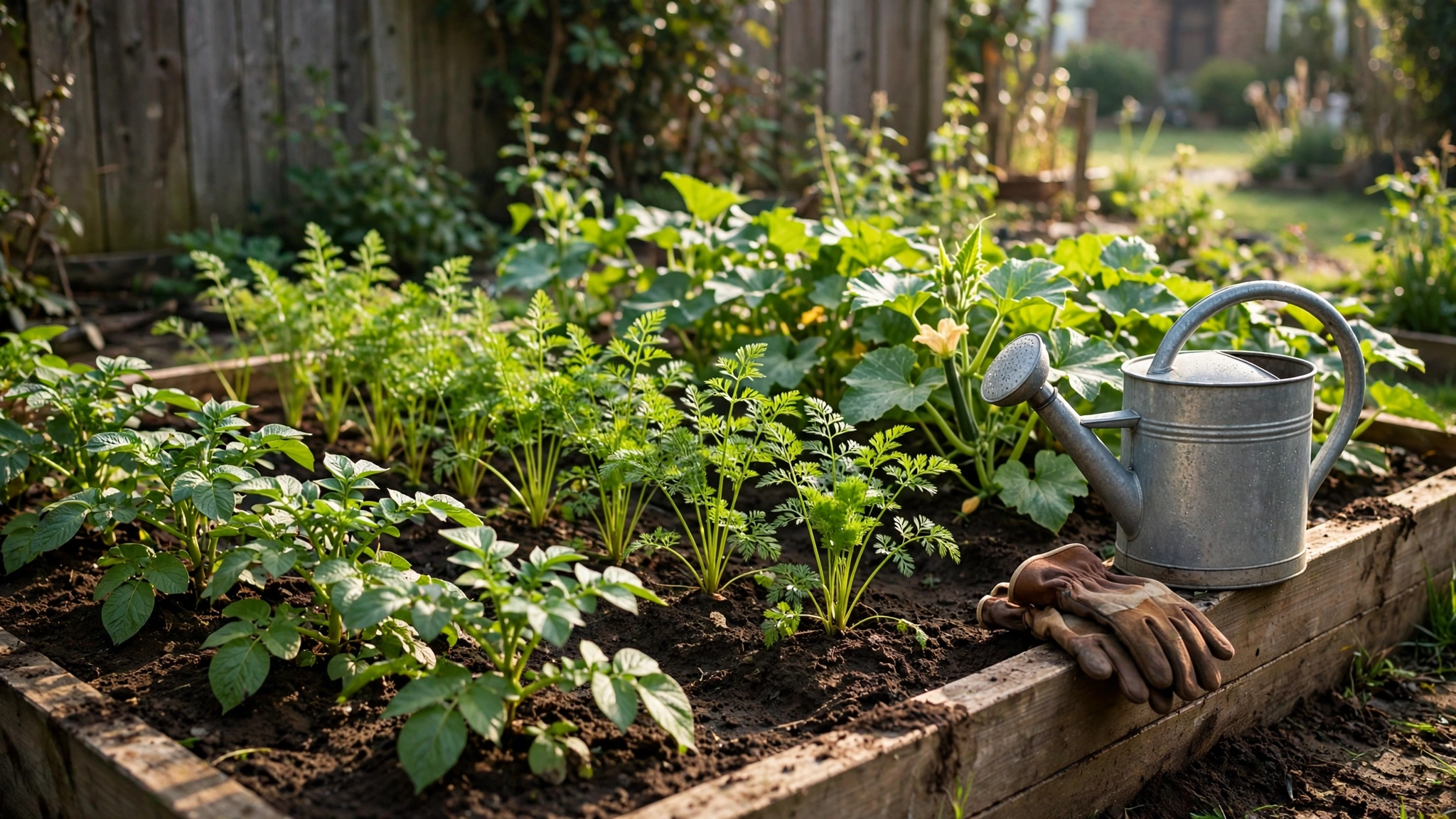
There is something deeply satisfying about eating a potato you grew yourself. Growing your own vegetables has surged in popularity across the UK, and for good reason: it saves money, it gets you outside, and the taste of a home-grown tomato, still warm from the sun, is genuinely different from anything bought in a shop.
The good news for beginners is that you do not need an allotment, a greenhouse, or years of experience. A small patch of garden, a few pots on a patio, or even a sunny windowsill is enough to start. Here is how to begin, what to grow first, and how to avoid the common mistakes.
Start Small — and Start With What You Like to Eat
The biggest mistake new vegetable growers make is trying to grow everything at once. A huge, ambitious plot quickly becomes overwhelming, and an overwhelming plot becomes a weedy one. Start small: one or two raised beds, or a handful of large pots, and a few crops you actually enjoy eating.
The best first vegetables are the ones that are forgiving, productive, and hard to get wrong. Potatoes, carrots, courgettes, and tomatoes are all excellent starting points, and each teaches a different lesson about growing. Grow what your household eats — there is no point in a perfect crop of something nobody wants for dinner.
Potatoes: The Easiest Win
Potatoes are the ideal beginner crop. They are cheap to start, they grow in almost any soil, and they are remarkably tolerant of neglect. You can grow them in the ground, in a large bag, or in a pot — which makes them perfect for small gardens and patios.
Plant seed potatoes in early to mid-spring, once the soil has started to warm. Dig a trench or a deep hole, place the potatoes with the shoots facing up, and cover them. As the plants grow, earth up soil around the stems — this protects the developing tubers from light, which turns them green. Water in dry spells, and harvest when the plants flower (for early varieties) or when the foliage dies back (for maincrop). A single bag of seed potatoes can produce kilos of potatoes for the price of a few bags of crisps.
Carrots: Patience and Preparation
Carrots need a little more care, but they reward it. They prefer light, stone-free soil — stones cause forked, stunted roots. If your soil is heavy clay, grow carrots in a deep pot or a raised bed filled with a mix of garden soil and sand or compost.
Sow carrot seed thinly in rows from spring onwards, and thin the seedlings as they grow so each root has room. Carrots are slow to germinate, and the seed bed must not dry out, so water gently in dry weather. The main pest is carrot fly, which is attracted by the smell of crushed carrot foliage: avoid thinning on a still day, and consider a fine mesh cover or a barrier of fleece. Harvest when the roots are finger-thick — pull one and check, rather than guessing.
Courgettes: Prolific and Generous
Courgettes are famously productive — two plants will feed a family, and three will have you giving them away to neighbours. They need sun, rich soil, and space: each plant spreads to about a metre across, so give them room.
Sow courgette seeds indoors in spring, or buy young plants from a garden centre. Plant out after the last frost, into soil enriched with compost or well-rotted manure. Water well, especially in dry weather, and feed every couple of weeks with a tomato feed once the fruits start forming. Pick courgettes small and often — little ones taste better, and regular picking encourages the plant to keep producing. Leave one too long and you will have a marrow.
Tomatoes: Sun, Water, and Support
Tomatoes need warmth and sun. In most of the UK, they do best in a greenhouse, a conservatory, or a sheltered sunny spot outdoors — a south-facing wall is ideal. Cherry tomatoes are the easiest for beginners: they are more forgiving than large beefsteak varieties and they crop heavily.
Start tomatoes indoors in spring, and move them outside once nights are reliably warm. Plant them in large pots or grow bags, with a cane for support. Water consistently — erratic watering causes split fruit — and feed weekly with tomato feed once flowers appear. Remove the side shoots on cordon (tall) varieties to concentrate the plant's energy on fruit. Pick tomatoes when fully coloured; they taste best the same day.
Small Spaces, Big Harvests
You do not need a big garden to grow vegetables. Pots, grow bags, and window boxes can produce surprising amounts of food. Herbs, salad leaves, spring onions, and radishes all thrive in containers. A sunny balcony can grow tomatoes, chillies, and herbs. Even a windowsill can grow cut-and-come-again lettuce and cress.
Vertical growing helps too: beans and peas climb canes, courgettes can be trained up a trellis, and hanging baskets can hold strawberries and cherry tomatoes. Think upwards as well as outwards, and a small space can be surprisingly productive.
Through the Seasons
Vegetable growing is a year-round hobby, even in the UK. Spring is for sowing and planting. Summer is for watering, feeding, and harvesting. Autumn is for clearing, composting, and planting garlic and overwintering onions. Winter is for planning — and for enjoying stored potatoes, frozen courgettes, and jars of tomato sauce from the summer glut.
Keep a simple notebook or a phone note of what you planted, where, and how it did. It sounds fussy, but it is the single best way to improve year on year: you will know what thrived, what failed, and what to grow more of next time.
The Joy of It
Growing your own vegetables is not about self-sufficiency or saving the planet single-handedly. It is about a few hours a week outside, the pleasure of watching something grow, and the unbeatable taste of food you planted yourself. Start small, grow what you love, and enjoy it. The first potato is the hardest — after that, you will be hooked.