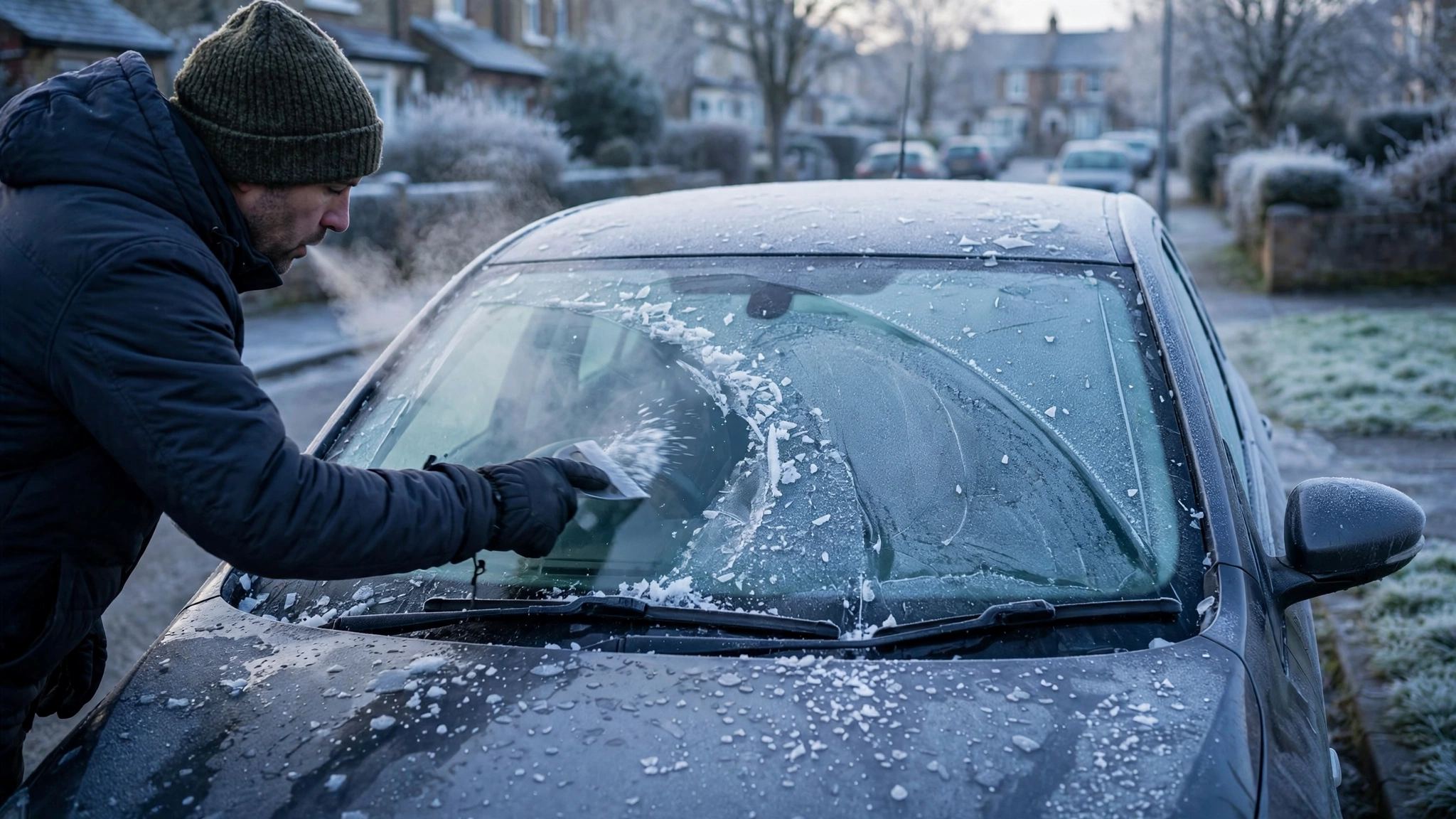
Every year, British winter arrives the same way: a cold snap, a dark evening commute, and a sudden wave of cars that will not start. Most of those breakdowns are preventable. A winter check does not require mechanical expertise or expensive equipment — just an hour, a few basics, and the willingness to look at the things that usually get ignored until they fail.
Here is the checklist that actually matters.
1. The Battery — The Number One Winter Failure
Cold weather is hard on car batteries. The chemical reactions inside a battery slow down in the cold, just when the engine needs more power to turn over and the heater, lights, and heated screens are all drawing current. A battery that coped in September can give up on the first frosty morning of November.
Warning signs are easy to spot: slow cranking, dim headlights, or a dashboard that flickers when you turn the key. If your battery is more than four or five years old, or if starting has felt sluggish lately, get it tested before winter — most garages and motor factors will test it free of charge. A new battery is far cheaper than a morning spent waiting for recovery.
2. Tyres — Grip Is Everything
Tyres are the only part of the car that touches the road, and in winter that contact matters more than at any other time of year. Check the tread depth across the whole width of each tyre — the legal minimum is 1.6mm, but most safety experts recommend replacing tyres well before they get that low, particularly for winter driving. Also look for cracks, bulges, or uneven wear, which can signal alignment or pressure problems.
Pressure matters too, and cold air lowers it. Check pressures at least once a month through winter, including the spare if you have one, and inflate to the figure in the handbook or on the driver's door sticker — not the maximum printed on the tyre sidewall. If you drive regularly in hilly or rural areas where ice and snow linger, it is worth discussing winter or all-season tyres with a tyre fitter; for most UK drivers, good all-season tyres are a sensible compromise.
3. Lights, Wipers, and Seeing Clearly
Winter means driving in the dark more often, in rain and spray. Walk around the car and check every light: headlights, tail lights, brake lights, indicators, fog lights, and the number-plate light. Have someone watch the brake lights while you press the pedal, or back up to a wall at night and use the reflection.
Wipers deserve the same attention. If they smear, squeak, or leave streaks, replace the blades — they are inexpensive and take minutes to fit. Top up the washer fluid with proper screenwash, not plain water: screenwash contains antifreeze that stops the reservoir and jets freezing on a cold night, and it clears road grime far better than water alone. Keep an ice scraper and a de-icer in the car, not in the garage.
4. Coolant, Oil, and Fluids
The cooling system needs the right concentration of antifreeze — not just in the depths of winter, but all year round. If the coolant level is low or the mixture is weak, the engine can freeze and crack on a cold night, which is one of the most expensive failures a car can suffer. If you are unsure of the mixture, a garage can test it in minutes during a routine service.
Check the oil level and its condition while you are there. Cold starts are harder on the engine, and clean oil at the right level is the simplest protection it gets. Top up the brake fluid if needed, and if the brake pedal feels soft or spongy, have the brakes inspected before winter rather than after.
5. A Small Emergency Kit
Most winter journeys end uneventfully, but the ones that do not are much easier with a few basics in the boot: a warm blanket, a torch with charged batteries, a phone charger, a bottle of water, and a snack. A high-visibility vest and a warning triangle are worth carrying too — if you do break down on a dark road, being seen matters as much as being warm.
Keep the fuel tank at least a quarter full in cold weather, and before any long journey in snow or ice, check the forecast and road conditions, tell someone your route, and allow extra time. The best winter driving decision is often the simplest one: if the journey is not essential and the conditions are bad, wait.
An Hour Now, A Calmer Winter
None of this is complicated, and none of it requires a garage unless something is found wanting. The pattern is the same every year: the drivers who check their battery, tyres, lights, and fluids in October are the ones who sail through January. Spend the hour now, while the weather is still kind — your future self, standing in a frosty car park at seven in the morning, will be glad you did.