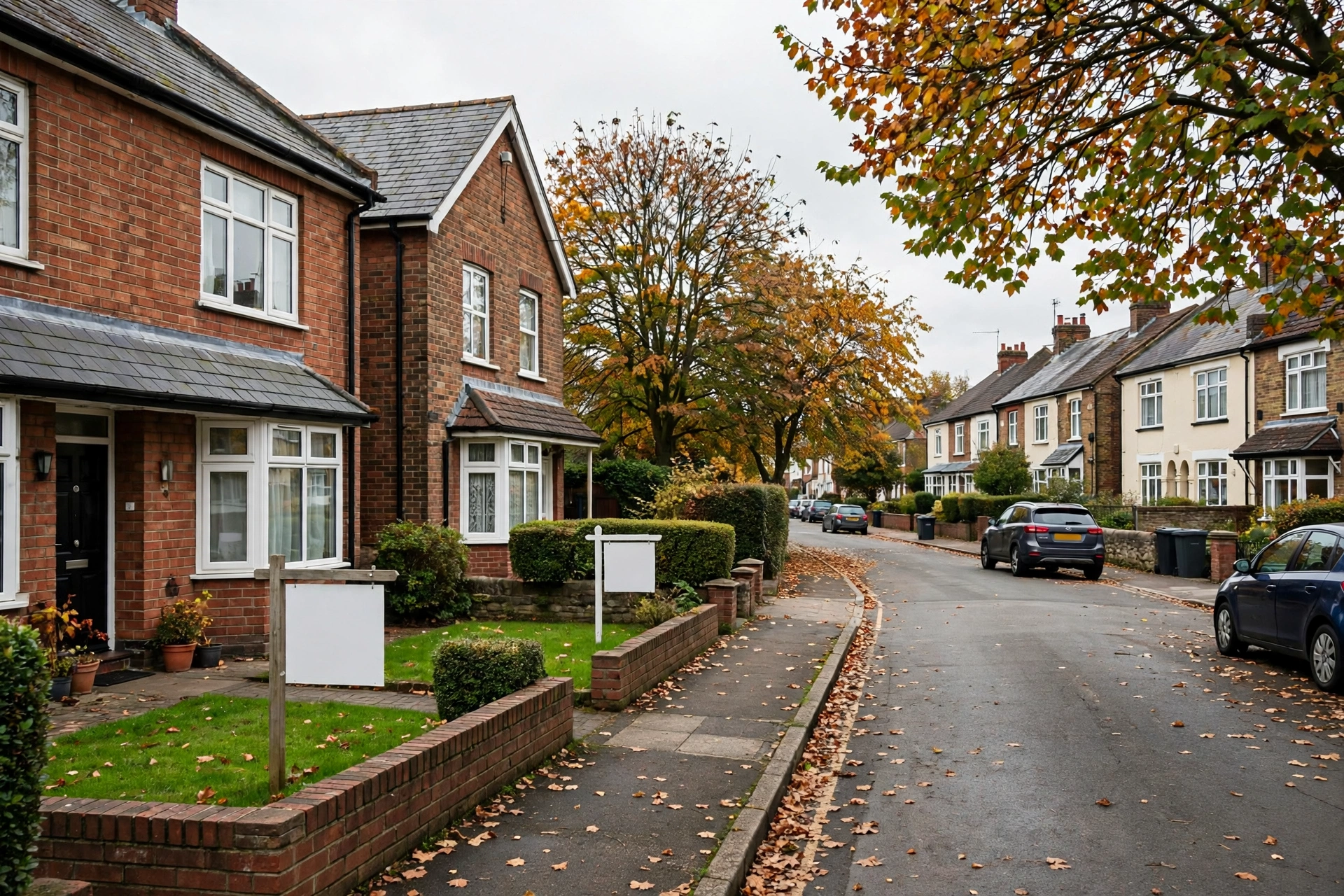
The national average hides the real story, which is local — and the local story, in turn, hides a second split, between the three camps trying to live in the same market. Buyers, sellers and renters are not experiencing one housing market with three viewpoints. They are experiencing three different markets, pulled in different directions by the same forces: sold prices on their street, borrowing costs set far away, and a supply of homes that is tight in one place and loose in another. In London and the South East, where prices started from a much higher base, buyers are stretching further for smaller homes; in the North East and parts of Wales, the same deposit buys considerably more space, and the market moves at a different pace. Property type splits it further: a two-bedroom flat in a city centre, a three-bedroom semi on a commuter line, and a cottage in a rural village do not rise and fall together, and a seller in one can have a completely different month from a seller in the other.
What makes this moment particularly difficult is that housing is not just a financial decision. For most families, a home is where life happens, where children grow up, where work is done and where plans for the future are made. When the market feels unpredictable, those plans feel harder to make. First-time buyers wonder whether to wait or to press ahead. People looking to move for work or family reasons wonder whether they will find something suitable within reach. Homeowners thinking of downsizing or upsizing wonder what their own property is really worth. All of those questions are being asked against a backdrop of higher borrowing costs than many people were used to in recent years, and that single change has altered the calculations for almost everyone.
Buyers: Borrowing Costs Changed Everything
For buyers, the dominant force is borrowing. For many years, buyers became accustomed to relatively low borrowing costs, and that shaped what people felt they could afford. When borrowing became more expensive, monthly payments rose for the same size of loan, and that changed affordability overnight for a large number of households. Some buyers had to lower their budgets. Others decided to wait, hoping conditions would ease. Some chose to stay put rather than move, which in turn reduced the number of homes coming onto the market.
Mortgage lenders have also become more careful in how they assess what borrowers can afford. That is not a criticism of lenders, who have a duty to lend responsibly, but it does mean that buyers need to be well prepared. A clear picture of income, outgoings and existing commitments matters, as does a realistic deposit. Advice from a mortgage adviser can help buyers understand the range of products available and what each would mean in practice, rather than relying on headline rates alone.
For existing homeowners coming to the end of a fixed deal, the change can feel just as significant. A new deal may cost more each month than the one it replaces, and that can squeeze household budgets that are already coping with higher costs elsewhere. Planning ahead, reviewing options in good time and speaking to a lender or adviser before a deal ends can help avoid a last-minute scramble.
First-time buyers are often described as the lifeblood of the housing market, because their purchases allow existing owners to move on. At the moment, many first-time buyers are caught in a difficult balancing act. On one hand, saving a deposit while paying rent is hard, especially when rents themselves have risen. On the other hand, waiting carries its own risks, because rents continue to be paid and there is no guarantee that buying will become easier. Some first-time buyers are looking at smaller properties, or at areas slightly further from where they originally hoped to live, in order to make the numbers work. Others are buying with family help, or considering shared ownership and other schemes that lower the initial cost of getting onto the ladder. Each route has trade-offs, and what works for one household may not work for another. The key is to understand the full costs involved, including fees, moving costs and ongoing maintenance, rather than focusing on the purchase price alone.
Take the worked version of that balancing act. A renter saving a deposit while paying rent each month has two numbers that matter: the deposit saved so far, and the monthly payment a lender will actually allow. Before offering, that buyer can check what similar homes on the same street actually sold for — HM Land Registry publishes sold prices, so the asking price can be tested against evidence rather than hope. And when a lender runs its affordability check, it does not just ask whether the payment is affordable today; it tests whether it would still be affordable if interest rates rose. Knowing that test exists, and asking a mortgage adviser to run the numbers at a higher rate before you fall for a property, is the difference between a comfortable purchase and one that strains from the first month.
Sellers: Realism, Evidence, and Patience
Sellers face the mirror image of the buyers' problem. A street, a town or a region can behave quite differently from the average, depending on local jobs, transport links, schools and the supply of homes for sale. Areas with strong demand and limited supply tend to hold up better, because buyers are competing for a smaller number of properties. Areas where more homes are coming onto the market, or where local employment is weaker, can see a softer picture. The type of property matters too: smaller homes that suit first-time buyers or downsizers often attract a different level of interest from larger family homes, and flats in city centres, houses in suburbs, and homes in rural villages each appeal to different buyers, and their fortunes do not always move together.
For sellers, pricing from sold evidence, rather than testing a high asking price, is what keeps a sale moving. Pricing a home too high in the hope of testing the market can backfire, because properties that linger unsold can become harder to sell, not easier. Buyers notice when a home has been on the market for a long time, and they may wonder what is wrong with it, even when the answer is simply that the price was too ambitious at the start.
That does not mean sellers should undervalue their homes. It means pricing should be based on evidence: what similar properties nearby have actually sold for, how much interest there is locally, and what condition the property is in. A home that needs work will be judged differently from one that is ready to move into, and sellers should be honest about that when setting expectations. The sold-price and time-to-sell checks apply street by street, not to the national average, and a seller who prices from them, presents well and is prepared for a process that may take longer than it once did is in a stronger position than one who prices from hope.
Renters: Caught Between Two Markets
Renters are the third camp, and they feel both of the other camps' problems at once. The housing market and the rental market are closely linked. When fewer people can buy, more people stay renting, and that puts pressure on rents and on the availability of rental homes. Renters who hoped to buy may find themselves renting for longer than planned, while renters who are settled may face higher rents when they renew.
That longer stay in renting has practical consequences worth spelling out. A renter saving for a deposit is saving from income that has already paid that month's rent, so the deposit grows slowly — which is why many first-time buyers take years to get there, and why a rent rise can wipe out months of saving. Renewal time is the moment to check the tenancy properly: how long is the new term, what notice is required on each side, and is the deposit protected in a government-backed scheme, as landlords are required to do? Renters should also keep a record of the property's condition at move-in, with dated photos, because that record is what protects the deposit at move-out. And if buying is the goal, the most useful habit is boring but effective: a separate savings account for the deposit, fed on payday before the money can be spent elsewhere, so the balance only moves in one direction.
Forecasts will keep disagreeing, and that is worth saying plainly: anyone who claims to know exactly where prices go from here is selling something. What can be said is which drivers to watch. If borrowing costs ease, affordability improves and activity usually picks up. If they stay high, the market stays subdued, with prices moving modestly rather than dramatically. The other drivers are local and checkable: how many homes are for sale in your area, how long they are taking to sell, and what similar properties actually sold for — all of which a buyer or seller can look up before making a decision.
Which Camp Are You In?
The three camps do not need the same advice, and that is the decision this market actually requires. If you are a buyer, your camp's question is affordability under stress: check sold prices on your street, ask an adviser to test affordability at a higher interest rate, and have the deposit, fees and moving costs totalled before you offer. If you are a seller, your camp's question is evidence over hope: price from what similar properties actually sold for, present the home honestly for its condition, and allow for a longer process than the market once promised. If you are a renter, your camp's question is protection while you save: check the tenancy term and notice, confirm the deposit is protected, keep the dated move-in record, and feed a separate deposit account on payday. The national headline will keep moving, and it will keep describing nobody in particular. Your camp, your street and your numbers are the market you actually have to decide in.