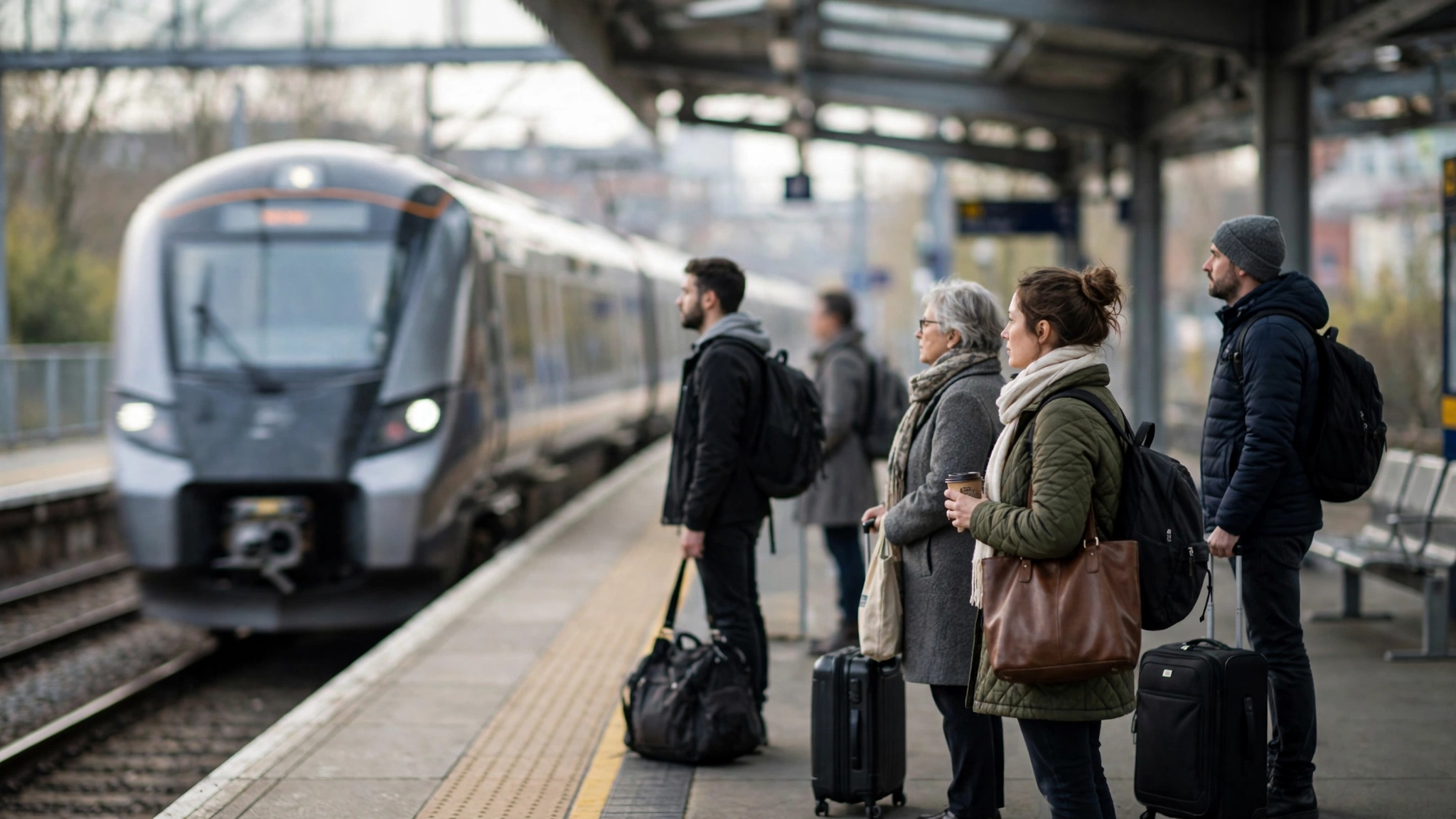
For millions of people across the UK, the train is part of daily life — the commute to work, the trip to university, the weekend visit to family. It is also one of the household costs that seems to creep upward year after year, often faster than wages. Yet talk to regular travellers and a different picture emerges: many of them are paying far less than the headline fare, using a mix of habit, timing, and a few tricks that anyone can learn.
None of the ideas below involve breaking any rules. They are the ordinary, legitimate ways seasoned commuters keep their rail costs down — and most of them take only a few minutes to set up.
1. Split Your Ticket — Same Train, Lower Fare
Split ticketing is the best-known money-saver on the British rail network, and it still surprises people. Instead of buying one ticket from A to C, you buy two or more tickets for the legs of the same journey — A to B, then B to C — and stay on the same train throughout. On many routes, the combined price of the split tickets is lower than the single through fare.
The reason is historical: fares were set route by route over many years, and they do not always add up neatly. Split-ticketing websites and apps do the maths for you and sell the combination in one checkout. The only rule that matters is that the train must stop at every station where your tickets change over — which it does on most ordinary journeys.
2. Travel Off-Peak Whenever You Can
Peak fares exist because trains are busiest in the morning and evening rush. If your job, studies, or plans give you any flexibility at all, travelling just outside those windows can cut the price dramatically. An off-peak return is often far cheaper than the equivalent anytime fare, and the train itself is usually quieter and more comfortable.
Even a small shift helps. Leaving half an hour later, or catching a train that arrives after the morning peak, can move you into a cheaper ticket. If you commute, it is worth asking your employer whether a slightly staggered start time is possible — the saving over a year can run into hundreds of pounds.
3. Check Whether a Railcard Pays for Itself
Railcards are one of the simplest bargains in British travel, and many people who qualify never buy one. The 16–25 Railcard, the 26–30 Railcard, the Two Together Railcard, the Family & Friends Railcard, and the Senior Railcard all offer a third off most fares, and the annual card usually pays for itself after just a handful of journeys.
The key is to do the arithmetic for your own travel. If you make even two or three longer trips a year — visiting family at Christmas, a weekend away, a match or a concert — a railcard will often cover its cost and then some. Some railcards are now digital, living in an app on your phone, so there is no card to lose.
4. Book Advance Tickets for Longer Journeys
For longer trips, the cheapest fares are almost always the advance tickets released weeks ahead. Unlike flexible tickets, advance fares are tied to a specific train — but if your plans are fixed, the difference can be enormous. A journey booked a month ahead can cost a fraction of the fare bought on the day.
The habit to build is simple: the moment a trip is confirmed, check the fare. Advance tickets sell out, and prices rise as the travel date approaches, so the early buyer gets the best deal. Set a reminder to check the moment you know your dates.
5. Look at Season Tickets — and the New Flexible Options
If you travel the same route several days a week, a season ticket is often cheaper than buying daily tickets. Weekly, monthly, and annual season tickets all exist, and the annual version usually includes a discount equivalent to several free weeks.
But the world of work has changed. If you now travel two or three days a week rather than five, a full season ticket may no longer be the best deal. Flexible season tickets — bundles of day passes to use across a month — were designed for exactly this pattern, and for hybrid workers they are often the cheapest option. Compare both before you commit.
6. Use Group and GroupSave Deals
Travelling with others? Many train operators offer GroupSave, which gives a third off for groups of three or four adults travelling together on off-peak services. Families have their own version through the Family & Friends Railcard, which discounts adult and child fares when travelling together.
The point is broader than any one offer: fares are rarely just per-person. Whenever two or more people are travelling together, it is worth checking whether a group product or a railcard combination beats four individual tickets. A two-minute check at the booking stage can save a surprising amount.
7. Compare the Whole Journey, Not Just the Train
Finally, step back and look at the full door-to-door trip. A slightly longer train route, a bus to a different station, cycling to the station instead of driving, or parking at a cheaper station further out can all change the total cost. Park-and-ride stations, for example, often have far lower parking charges than city-centre termini.
It is also worth checking whether your employer offers a season-ticket loan or a cycle-to-work scheme — both spread or reduce the cost of getting to work. The cheapest journey is not always the fastest one, and for a regular commute the trade-off is often worth making.
Small Habits, Big Savings
No single trick here will transform your finances overnight. But rail travel is one of those costs where small, repeated savings compound: a few pounds saved per journey, several journeys a week, across a whole year. The commuters paying the least are rarely doing anything dramatic — they have simply built the habit of checking before they buy, booking early, and travelling at the cheapest time they can. Start with one or two of these ideas, and the savings tend to follow.