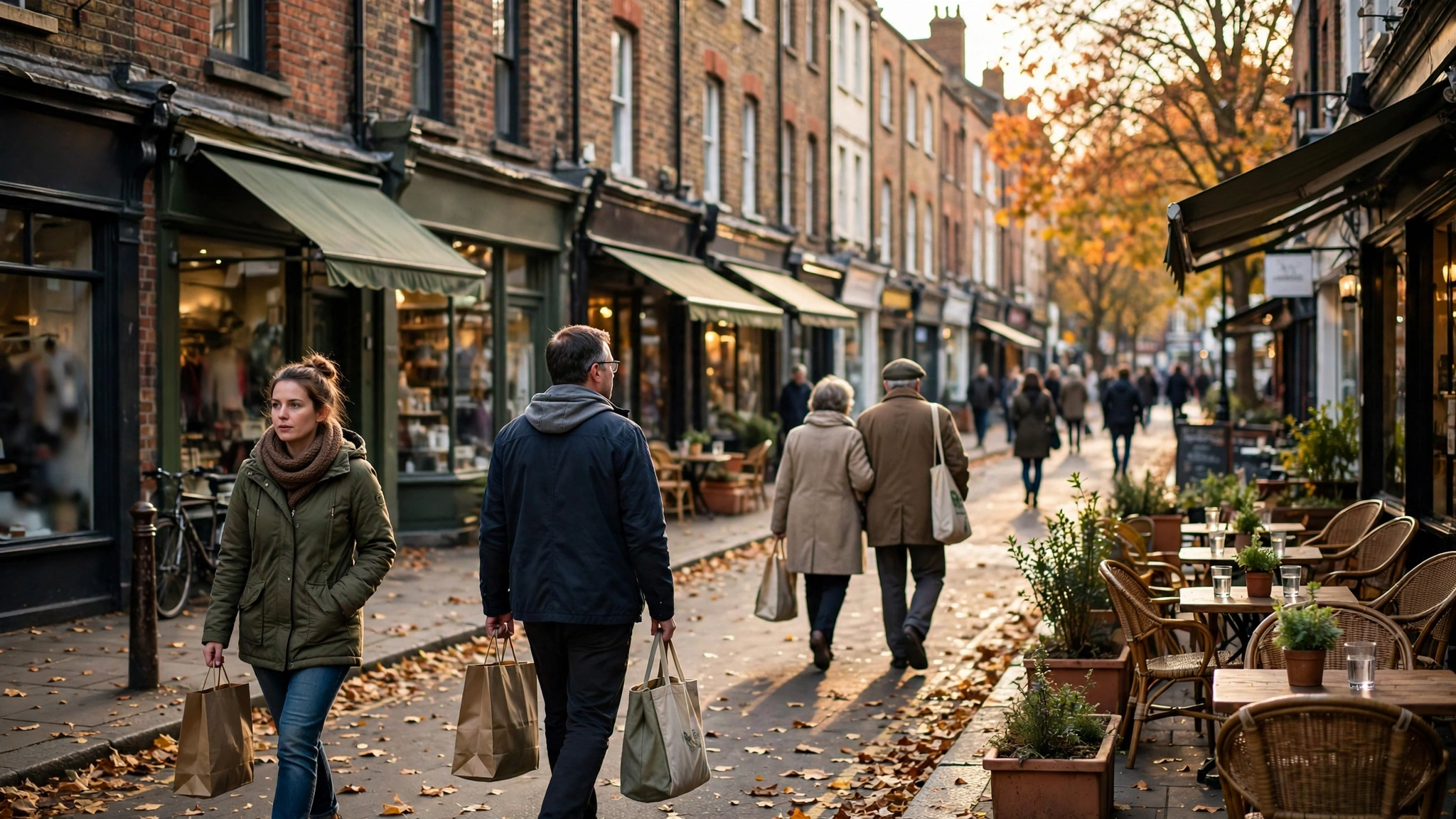
Walk down almost any British high street this autumn and you will notice something: it does not look quite like it did five years ago. Some familiar names are gone. Some shopfronts have changed completely. And yet the streets are not dying — they are changing into something different, and in many towns the change is more hopeful than the headlines suggest.
The old high street was built around one idea: a row of shops selling things. The new one is built around something broader — a place to eat, meet, get things done, and be entertained, with shopping as one part of the mix. Here is what that shift looks like on the ground.
The Shops That Are Closing — and What Replaces Them
It is no secret that parts of traditional retail have struggled. Online shopping, rising rents, and changing habits have hit large chain stores and department stores hard, and their closures leave visible gaps. An empty flagship store can make a whole street feel tired, and for a while many town centres did feel that way.
But look at what is moving into those spaces. In town after town, former retail units are reopening as something else: coffee shops and bakeries, independent restaurants, gyms and yoga studios, dentists and health clinics, barbers and beauty salons, nurseries and co-working spaces. The pattern is consistent — services and experiences are taking the place of shelves and stockrooms.
This matters because service businesses bring people back regularly. A shopper might visit a clothing store twice a year; a gym member or a cafe regular comes every week. The new tenants generate the footfall the old ones used to provide, just in a different way.
The Rise of the Independent
If the big chains are shrinking, the independents are having a moment. Local bookshops, delicatessens, craft shops, florists, and specialist food stores are opening in streets where they once could not afford the rent — and many are thriving, because they offer something online shopping cannot: advice, atmosphere, and a human connection.
Part of their appeal is curation. A good independent shop is a filter: someone knowledgeable has chosen a small range of products worth your attention, rather than an endless catalogue. Part of it is trust — you buy from a person you know, whose reputation is on the line with every sale. And part of it is simply pleasure. Browsing a well-kept local shop is a more enjoyable way to spend a Saturday morning than scrolling a website.
Markets are part of the same story. Street-food markets, farmers' markets, and vintage and craft markets have grown rapidly, drawing crowds that then spill into the surrounding shops. A good market day can be the busiest day of the week for a town centre.
The High Street as a Meeting Place
Perhaps the biggest change is the least visible: the high street is becoming a social place again. Outdoor seating, pedestrianised stretches, evening events, and food-and-drink-led evenings have turned town centres into places people go to spend time, not just to spend money.
This is most visible in the evenings. Streets that once emptied at half past five now stay lively later, with restaurants, bars, cinemas, and theatres pulling in the after-work crowd. Towns that invest in lighting, seating, and a clean, safe environment tend to see the benefit quickly — people linger, and lingering people spend.
It is a return, in some ways, to an older idea of what a town centre is for: not just commerce, but community. The market square was always a meeting place before it was a shopping place.
What This Means for Shoppers
For shoppers, the changing high street brings trade-offs. The convenience of one-stop shopping under a few big roofs has faded, and some things — particularly big-ticket goods and niche products — are now easier to buy online. But what has replaced it has its own advantages.
First, variety. A street of independents offers a more interesting mix than a row of identical chains. Second, service. Staff in small shops tend to know their products and their customers. Third, locality. Money spent in a local shop circulates locally — paying local wages, local suppliers, and local rents — in a way that money spent with a distant warehouse does not.
There are practical ways to make the most of the new high street. Visit on market days, when the street is at its liveliest. Give new independents a try in their first months — early support is what keeps them alive. And if your town has a loyalty scheme or a local gift card, use it: these schemes are designed to keep spending in the town.
Not Every Town — Yet
None of this is to say every high street is thriving. Some towns, particularly those that lost a major employer or that sit close to a large out-of-town shopping centre, are still struggling. Vacant units, reduced bus services, and a sense of neglect can reinforce each other, and turning that around takes real investment and patience.
But the overall direction is clear: the towns doing best are not the ones trying to recreate the high street of twenty years ago. They are the ones accepting the change — more food and drink, more services, more experiences, more reasons to visit — and building a town centre around how people actually live now.
A Street Worth Walking Down
The British high street has been declared dead many times. Each time, it has come back in a different form. This autumn's version — busier cafes, livelier markets, more independents, more life in the evenings — may be the most human version yet. It is less about buying things and more about being somewhere. And that, for a street whose job was always to bring people together, feels like a return to form.